

Role of Indigenous Breeds in Sustainable and Climate-Smart Dairy
Thirumurthi K
MVSc Scholar, Division of Veterinary Microbiology
ICAR–Indian Veterinary Research Institute (IVRI), Izatnagar–243122, Bareilly, Uttar Pradesh, India
Corresponding Author: zackthiru200151@gmail.com
| Abstract
India’s dairy sector confronts a dual imperative: meeting escalating nutritional demand while navigating accelerating anthropogenic climate change. This review evaluates indigenous Bos indicus breeds—Sahiwal, Gir, Rathi, Red Sindhi, and Tharparkar—as the cornerstone of sustainable, climate-smart dairy production. Through a multidimensional assessment encompassing thermotolerance, disease resistance, environmental footprint, nutritional value, and smallholder economics, empirical evidence demonstrates the superiority of native germplasm under resource-constrained, high-thermal-stress conditions. Indigenous cattle exhibit rapid up-regulation of heat shock proteins (HSP70/HSP90), innate resistance to tick-borne pathogens including Theileria annulata, lower absolute enteric methane emissions, efficient lignocellulosic feed utilization, and near-complete fixation of the nutritionally superior A2 beta-casein allele. Field-level economic data further validates their viability as low-input, high-return dairy systems for India’s 85 million smallholder farmers. Underpinned by robust policy initiatives such as the Rashtriya Gokul Mission and expanding sex-sorted semen technology, the strategic propagation of elite indigenous germplasm offers a scientifically validated, climate-resilient, and economically empowering pathway for sustainable dairy development. Keywords: Bos indicus, Climate-Smart Dairy, Thermotolerance, HSP70, Tick-Borne Pathogens, Enteric Methane, A2 Beta-Casein, Rashtriya Gokul Mission, Sustainable Agriculture, Blue Water Productivity |
1. Introduction: Re-envisioning the Dairy Paradigm
India’s dairy revolution, catalysed by Dr. Verghese Kurien’s Operation Flood, transformed the nation into the world’s largest milk producer. The primary strategy of the late twentieth century where rapid crossbreeding with exotic Bos taurus genetics has successfully expanded milk output but at growing ecological, physiological, and economic costs. As the dairy sector advances into a new era, the defining parameters of success are undergoing a profound transition. Convergent pressures of climate change, natural resource depletion, and evolving consumer demands necessitate a strategic shift from high-input, volume-centric production toward holistic, climate-resilient dairy frameworks.
At the core of this transition lies a renewed scientific interest in India’s indigenous Bos indicus cattle. Historically overshadowed in the pursuit of high yields, native breeds like Sahiwal, Gir, Rathi, Red Sindhi, and Tharparkar are now globally recognized for exceptional evolutionary adaptations to tropical environments. These breeds withstand extreme climatic conditions, efficiently utilize poor-quality roughages, and resist endemic pathogens with minimal pharmaceutical inputs. For over 85 million smallholder dairy farmers, the economic and ecological advantages of indigenous breeds represent not merely an environmental concern, but a bio-economic imperative essential for long-term livelihood security and climate resilience.
2. Genomic Resilience and Thermotolerance in Changing Climates
2.1 Cellular and Molecular Mechanisms of Thermal Adaptation
The most immediate threat posed by climate change to dairy productivity is thermal stress. Elevated ambient temperatures, coupled with high relative humidity, disrupt homeostatic balance, depressing feed intake, reproductive efficiency, and milk yield. The differential cellular response of Bos indicus versus Bos taurus to this stress forms the biological basis for climate-smart livestock management.
Indigenous cattle exhibit deeply genomic thermotolerance. During periods of high Temperature-Humidity Index (THI), breeds such as Sahiwal and Tharparkar demonstrate superior regulatory control through the rapid, robust up-regulation of Heat Shock Proteins—particularly the HSP70 and HSP90 gene families (Fariha et al ., 2025). These molecular chaperones prevent protein denaturation during acute cellular heat stress. Studies reveal that HSP70.1 mRNA expression is significantly higher and more rapidly mobilized in indigenous breeds during extreme summer conditions compared to crossbreds (Deb & Sengar, 2021). Simultaneously, indigenous cattle maintain elevated plasma catalase and glutathione peroxidase (GPx) activity, which are key antioxidant enzymes, alongside regulated malondialdehyde (MDA) concentrations, thereby effectively mitigating oxidative stress caused by reactive oxygen species (ROS).
In crossbred cattle, the magnitude and temporal sequence of this biochemical response are fundamentally mismatched to tropical climates. High-yielding crossbreds frequently enter chronic negative energy balance, expending massive metabolic energy on thermoregulation at the direct expense of milk production and immune competence (Fariha et al ., 2025).
2.2 Metabolic Heat Production and Feed Efficiency
Beyond cellular defense, Bos indicus breeds inherently produce lower metabolic heat during digestion. Comparative studies demonstrate that Sahiwal heifers generate significantly lower internal heat than Karan Fries (Holstein–Friesian crossbreds) under standardised feeding conditions, an advantage synergised by their highly vascularised skin, larger dewlaps, and denser functional sweat glands (Kumar et al ., 2016). The conserved energy is redirected toward immune competence, reproductive performance, and milk synthesis, traits critical for sustainable productivity under prolonged heat waves.
3. Disease Resistance and Its Role in Sustainable Dairying
High disease incidence elevates the carbon and economic footprint of milk production through mortality, discarded milk, veterinary expenditure, and shortened productive lifespans. Indigenous Bos indicus cattle possess remarkable innate resistance to endemic tropical diseases that disproportionately affect high-yielding crossbred herds.
Tick-borne diseases, particularly tropical theileriosis caused by Theileria annulata, are among the most economically significant constraints across tropical dairy systems (Singh et al., 2026). Molecular and epidemiological evidence indicates that disease severity is determined mainly by host genotype rather than parasite variation. Indigenous breeds and native buffaloes exhibit strong evolutionary tolerance and rarely develop severe clinical theileriosis under endemic exposure, whereas crossbred cattle frequently suffer acute disease, prolonged recovery, and elevated mortality (Larcombe et al., 2019). Even subclinical infections in crossbreds impose physiological costs, including impaired haematological parameters, reduced feed conversion, and compromised milk production (Kolte et al., 2017).
Mastitis, the costliest disease in global dairying, follows a similar pattern. Clinical investigations in Haryana reported California Mastitis Test positivity of 9.4% in indigenous cattle versus 17.9% in crossbreds, culture-positive quarters of 6.83% versus 18.8%, and somatic cell counts exceeding 500,000 cells/mL in 13.33% versus 23.33% of animals, respectively (Vashisth et al., 2021). Seasonal heat stress further increases mastitis incidence in crossbreds by compromising immune function (Chavan et al., 2025), whereas indigenous breeds maintain stable immune competence through superior thermotolerance. These disease-resistant traits reduce antimicrobial dependence, lower production costs, minimise antimicrobial resistance risks, and reinforce long-term dairy sustainability.
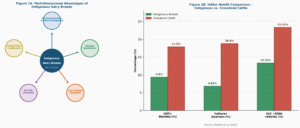
Figure 1. (A) Multidimensional advantages of indigenous dairy breeds (Bos indicus) as the hub of climate-smart dairying; (B) Comparative udder health parameters—indigenous vs. crossbred cattle [Source: Vashisth et al ., 2021].
Table 1. Comparative Traits: Indigenous (Bos indicus) vs. Crossbred Dairy Cattle
| Parameter | Indigenous Breeds (Bos indicus) | Crossbred Cattle (Bos taurus × Bos indicus) | Key Reference |
| Thermotolerance | High; rapid HSP70/HSP90 upregulation; low rectal temperature rise | Low; chronic heat stress; high energy expenditure for cooling | Fariha et al ., 2025; Deb & Sengar, 2021 |
| Metabolic Heat Production | Significantly lower under standardised feeding | Higher; greater energy loss as heat | Kumar et al ., 2016 |
| Tick-Borne Disease Resistance | High (tolerance to T. annulata); rarely develops severe disease | Susceptible; high morbidity and mortality | Larcombe et al ., 2019 |
| Mastitis (CMT+ prevalence) | 9.4% (culture+: 6.83%; SCC >500k: 13.33%) | 17.9% (culture+: 18.8%; SCC >500k: 23.33%) | Vashisth et al ., 2021 |
| Absolute Methane Emissions | Lower per animal | Higher per animal | Kumar et al ., 2016 |
| Feed Utilization | Efficient on lignocellulosic crop residues (wheat straw, bagasse) | Requires high-quality concentrate feed inputs | Kala et al ., 2017 |
| Blue Water Productivity | Lower direct water use; adapted to rain-fed systems | Higher direct water use; dependent on irrigated fodder | Sharma et al ., 2026 |
| A2 Beta-Casein Frequency | Near-complete fixation (A2A2 genotype dominant) | High A1 allele frequency; mixed milk protein profile | Mukesh et al ., 2022; Khan et al ., 2023 |
| Veterinary Expenditure | Minimal (~low fraction of total cost) | High; frequent antibiotic and acaricide use | Jagadeesh et al ., 2024 |
| Annual Net Profit (Smallholder) | ~₹16,392 per animal (gross returns ₹41,477) | Higher gross yield but higher input costs | Jagadeesh et al ., 2024 |
CMT = California Mastitis Test; SCC = Somatic Cell Count; T. annulata = Theileria annulata
4. Methane Emission Efficiency and Rumen Adaptation
Evaluating the climate impact of cattle genetics requires distinguishing absolute methane emissions per animal from emission intensity per unit of milk produced. Under comparable feeding conditions, indigenous breeds such as Sahiwal generate lower absolute methane emissions and less metabolic heat than crossbreds such as Karan Fries, reflecting a digestive physiology naturally adapted to tropical production systems (Kumar et al., 2016). Life Cycle Assessment studies sometimes report higher emission intensity in lower-yielding indigenous cattle because maintenance emissions are distributed across smaller milk volumes, a disparity reflecting productivity differences rather than biological inefficiency (Arora & Kataria, 2025). Targeted genomic improvement of elite indigenous breeds therefore offers the most sustainable trajectory by preserving thermotolerance and low baseline emissions while progressively enhancing milk yield.
The sustainability of indigenous dairy systems is further strengthened by their specialized rumen microbiome, dominated by fibrolytic phyla, namely Firmicutes and Bacteroidetes, equipped with a rich repertoire of carbohydrate-active enzymes (CAZymes) (Ye et al., 2025; Zhang et al., 2024). This enables efficient conversion of low-quality lignocellulosic crop residues, including wheat straw and sugarcane bagasse, into nutrients, thereby supporting circular crop–livestock systems while simultaneously reducing crop residue burning and associated greenhouse gas emissions (Kala et al., 2017).
5. Water-Use Efficiency and Climate Resilience of Indigenous Cattle
Under intensive commercial conditions, crossbred cattle often exhibit higher Blue Water Productivity (BWP), defined as consumptive water use per unit of milk, due to greater yields (Sharma et al., 2026). However, this apparent advantage depends heavily on controlled watering systems, mechanised cooling infrastructure, and large quantities of irrigated green fodder. Seasonal heat stress further escalates water demand in crossbreds. Indigenous cattle, evolutionarily adapted to semi-arid tropical environments, efficiently utilise rain-fed grasses and dry crop residues with substantially lower indirect water requirements. Their superior thermotolerance minimises dependence on costly cooling infrastructure, thereby reducing both direct and indirect water consumption. When evaluated within a holistic life cycle framework encompassing the entire feed–water continuum, the hydrological sustainability of indigenous breeds appears substantially more favourable, particularly in water-stressed regions experiencing groundwater depletion and irregular monsoon patterns (Irfan & Mondal, 2016).
6. Nutritional Superiority and the Emerging A2 Dairy Economy
Indigenous cattle breeds possess substantial commercial relevance due to the predominance of A2 beta-casein. Unlike A1 beta-casein commonly found in European Bos taurus cattle, A2 beta-casein resists enzymatic cleavage into beta-casomorphin-7 (BCM-7), a bioactive peptide associated with gastrointestinal discomfort and inflammation (Jeong et al., 2023; Borş et al., 2024). Consequently, A2 milk demonstrates improved gastrointestinal tolerance and reduced inflammatory responses among sensitive consumers (Fernández-Rico et al., 2022). Genetic studies confirm that Indian indigenous breeds such as Sahiwal, Gir, Red Sindhi, and Tharparkar possess a high prevalence of the desirable A2A2 genotype (Mukesh et al., 2022; Khan et al., 2023). Rising urban demand for naturally sourced and easily digestible dairy products has accelerated premium markets for certified A2 milk, artisanal ghee, and probiotic dairy products within climate-smart dairy systems.
7. Smallholder Economics, Policy Interventions, and the Path Forward
7.1 Economic Viability for Smallholder Farmers
The long-term sustainability of any dairy system ultimately depends on its economic viability for smallholder producers. Although crossbred cattle yield higher daily milk volumes, their maintenance requires substantial investment in concentrated feed, veterinary care, and heat-management infrastructure. In contrast, indigenous breeds offer a low-input, economically resilient production system better suited to rural smallholder conditions.
Field-level economic assessments among dairy farmers in Bengaluru South demonstrated favourable returns from indigenous breeds, including Hallikar, Gir, and Sahiwal. The annual maintenance cost was approximately ₹25,085, whereas gross returns from milk sales, calf production, and organic manure reached ₹41,477, generating a net annual profit of ₹16,392 per animal with a cost:benefit ratio of nearly 1:1.65. Veterinary expenditure constituted only a minimal fraction of production costs, reflecting the disease-resistant and low-maintenance nature of these breeds. Additional income from organic manure further supports integrated nutrient-recycling farming systems. (Jagadeesh et al., 2024)
7.2 Strategic Policy Architecture: Rashtriya Gokul Mission
The Rashtriya Gokul Mission (RGM) was established by the Government of India to promote conservation, genetic upgradation, and sustainable utilization of indigenous bovine breeds through advanced breeding and management strategies. A major intervention has been the large-scale deployment of sex-sorted semen technology in elite indigenous breeds (Ministry of Fisheries, Animal Husbandry & Dairying, 2026). Traditionally, the birth of male calves posed an economic burden following agricultural mechanisation. Sex-sorted semen technology now enables female calf production with approximately 90% accuracy, and more than 1.35 crore doses have been distributed through trained Multi-Purpose Artificial Insemination Technicians in Rural India (MAITRIs).
The RGM also promotes integrated conservation through Gokul Grams, which serve as indigenous cattle conservation centres operating on circular resource models. These self-sustaining centres focus on biogas generation, organic manure production, urine-based bio-inputs, and the marketing of premium milk from native breeds. Advanced biotechnologies, such as In Vitro Fertilization (IVF) and Multiple Ovulation Embryo Transfer (MOET), are utilized to accelerate elite germplasm propagation. Concurrently, institutions like the Indian Council of Agricultural Research (ICAR) and the National Dairy Development Board (NDDB) are supporting these efforts through genomic selection, breed characterization, and productivity enhancement programs to strengthen the rural dairy economy and elevate the market value of indigenous dairy products.
8. Conclusion: Blueprint for Climate-Smart Dairy
India’s indigenous Bos indicus cattle, shaped by millennia of natural selection in resource-constrained tropical environments, are uniquely positioned to address the biological and climatic challenges confronting modern dairy systems. Their superior thermotolerance, mediated through efficient HSP70/HSP90 regulation; innate resistance to endemic pathogens including Theileria annulata and mastitis-causing organisms; lower absolute methane emissions; efficient lignocellulosic feed conversion; and near-universal A2A2 genotype collectively establish a compelling evidence-based case for indigenous germplasm as the foundation of sustainable, climate-smart dairying.
Realising this potential requires a strategic transition from indiscriminate crossbreeding toward scientifically guided genetic improvement and conservation. Institutional frameworks such as sex-sorted semen technology, genomic selection, IVF/MOET, and Gokul Gram infrastructure provide the necessary support for this transition. In the spirit of Verghese Kurien’s cooperative vision, India’s dairy future must be built upon validated, climate-resilient indigenous breeds. Such a transition promises multiple long-term benefits, including nutritional security, sustainable rural livelihoods for smallholder families, reduced carbon and water footprints, and reinforcement of India’s global leadership as a responsible climate-smart dairy nation.
References
- Arora, K., & Kataria, P. (2025). Methane footprint of milk in integrated crop-livestock farms in Indian Punjab. Buffalo Bulletin, 44, 203–220. https://doi.org/10.56825/bufbu.2025.4434298
- Bhandari, G., & Chandel, B. S. (2020). Socio-economic determinants of breed choice: A case of Sahiwal vs. crossbred in India. International Journal of Current Microbiology and Applied Sciences, 9(1), 1427–1437.
- Borş, A., Borş, S. I., & Floriştean, V. C. (2024). Health-related outcomes and molecular methods for the characterization of A1 and A2 cow’s milk. Veterinary Sciences, 11(4), 172.
- Chavan, S. D., et al . (2025). Seasonal incidence of subclinical mastitis in indigenous and crossbreed cattle. International Journal of Veterinary Sciences and Animal Husbandry, 10(11), 276–280.
- Deb, R., & Sengar, G. S. (2021). Comparative miRNA signatures among Sahiwal and Frieswal cattle breeds during summer stress. 3 Biotech, 11(2), 79.
- Fariha, et al . (2025). Comparative analysis of heat stress response in Holstein Friesian and Sahiwal cattle through HSP70 gene expression. Animal Genetics, 56.
- Fernández-Rico, S., et al . (2022). A2 milk: New perspectives for food technology and human health. Foods, 11(16), 2387.
- Irfan, Z. B., & Mondal, M. (2016). Water footprint analysis in dairy industry in India. International Journal of Environmental Science and Development, 7(8), 591–594.
- Jagadeesh, M. S., et al . (2024). Economic insights into A2 milk: Production costs and consumption trends in southern Karnataka. International Journal of Agriculture Extension and Social Development, 7(8), 41–48.
- Jeong, H., Park, Y. S., & Yoon, S. S. (2023). A2 milk consumption and its health benefits: An update. Food Science and Biotechnology, 33(3), 491–503.
- Jose, V. L., et al . (2017). Metagenomic insights into the rumen microbial fibrolytic enzymes in Indian crossbred cattle fed finger millet straw. AMB Express, 7(1), 13.
- Kala, A., et al . (2017). Impact of levels of total digestible nutrients on microbiome, enzyme profile and degradation of feeds in buffalo rumen. PLOS ONE, 12(2), e0172051.
- Khan, R., et al . (2023). Potential status of A1 and A2 variants of bovine beta-casein gene in Indian cattle breeds. Animal Biotechnology, 34(9), 4878–4884.
- Kolte, S. W., et al . (2017). PCR diagnosis of tick-borne pathogens in Maharashtra indicates fitness cost with carrier infections is greater for crossbreed than native cattle. PLOS ONE, 12(3), e0174595.
- Kumar, S., et al . (2016). Estimation of metabolic heat production and methane emission in Sahiwal and Karan Fries heifers. Veterinary World, 9(5), 496–500.
- Larcombe, S. D., et al . (2019). The impact of tick-borne pathogen infection in Indian bovines is determined by host type. Infection, Genetics and Evolution, 75, 103972.
- Ministry of Fisheries, Animal Husbandry & Dairying. (2026, March 18). Promotion of indigenous cow breeds and A2 milk certification. Government of India. https://pib.gov.in/PressReleasePage.aspx?PRID=2241795
- Mukesh, M., et al . (2022). Demographic pattern of A1/A2 beta casein variants in native cattle breeds (Bos indicus) of India. 3 Biotech, 12(8), 167.
- Priyashantha, H., et al . (2025). Role of A2 milk in rural transformations: Health benefits, market potential, and sustainable production pathways. Dairy Science and Management, 2.
- Sharma, H., et al . (2026). Impacts of livestock species and farm size on blue water productivity of dairy farming sheds in Punjab. Water, 18(8), 973.
- Singh, N. K., et al . (2026). Cattle tick control in India: Current strategies and future directions. Veterinary Parasitology: Regional Studies and Reports, 69, 101445.
- Vashisth, H. K., et al . (2021). Comparison of occurrence of mastitis in indigenous and crossbred/exotic cows. Indian Journal of Veterinary Medicine, 41(1), 27–33.
- Ye, X., et al . (2025). The crosstalk between host and rumen microbiome in cattle. World Journal of Microbiology and Biotechnology, 41(8), 267.
- Zhang, X., et al . (2024). Metagenomic and metabolomic analyses reveal differences in rumen microbiota between grass- and grain-fed heifers. Frontiers in Microbiology, 15, 1336278.