

Summer Management of Captive Indian Elephants: Best Practices for Welfare, Health and Productivity
By Pashudhan Praharee Editorial Desk
The Indian elephant (Elephas maximus indicus) is an iconic species deeply intertwined with India’s cultural, religious, and ecological heritage. Thousands of captive elephants are maintained in temples, forest camps, rescue centers, zoos, safari parks, and private facilities across the country. With rising summer temperatures, often exceeding 40–45°C in many parts of India, special attention must be given to the welfare and management of captive elephants to prevent heat stress, dehydration, skin disorders, and behavioral problems.
Proper summer management is not merely about comfort—it is essential for ensuring the physical and psychological well-being of these magnificent animals.
Understanding Heat Stress in Elephants
Unlike many mammals, elephants possess relatively few sweat glands and rely heavily on behavioral adaptations such as bathing, mud wallowing, ear flapping, and seeking shade to regulate body temperature.
During extreme summer conditions, elephants may exhibit:
Excessive ear flapping
Reduced feed intake
Increased water consumption
Lethargy and fatigue
Irritability and aggression
Rapid breathing
Dehydration
Heat exhaustion
Early identification of these signs is crucial for preventing serious health complications.
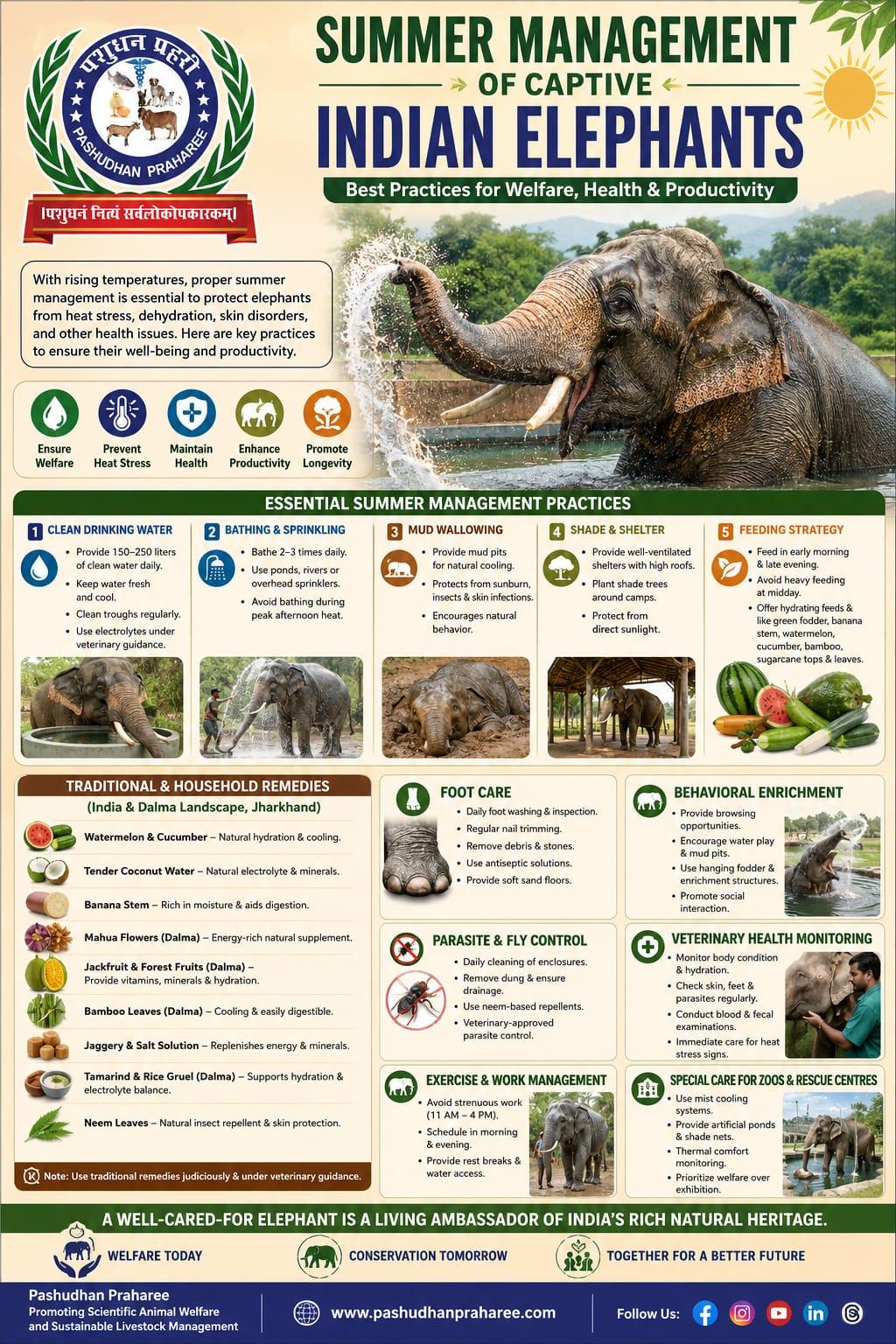
Essential Summer Management Practices
- Continuous Access to Clean Drinking Water
An adult elephant may consume 150–250 liters of water daily, and even more during peak summer months.
Recommendations:
Provide fresh, cool drinking water throughout the day.
Clean water troughs regularly.
Ensure water availability during transportation and field activities.
Add electrolytes under veterinary supervision when necessary.
- Frequent Bathing and Water Sprinkling
Bathing is one of the most effective cooling mechanisms for elephants.
Best Practices:
Bathe elephants at least 2–3 times daily during extreme heat.
Use ponds, rivers, or specially designed bathing tanks whenever available.
Employ overhead sprinklers in captive facilities.
Avoid bathing during the hottest part of the afternoon.
- Mud Wallowing: Nature’s Sunscreen
Mud acts as a natural cooling agent and provides protection against:
Sunburn
Insect bites
Skin infections
Excessive heat absorption
Facilities should provide designated mud wallowing areas where elephants can freely cover themselves with mud.
- Adequate Shade and Shelter
Shade is critical during hot weather.
Ideal shelters should:
Be well ventilated.
Have high roofs.
Include natural tree cover whenever possible.
Protect elephants from direct solar radiation.
Planting indigenous shade trees around elephant camps provides long-term environmental benefits.
- Appropriate Feeding Strategies
During summer, elephants often reduce feed intake.
Recommended Feeding Schedule:
Early morning feeding.
Late evening feeding.
Avoid heavy feeding during midday heat.
Preferred Summer Feeds:
Green fodder
Banana stem
Sugarcane tops
Bamboo
Jackfruit leaves
Ficus species leaves
Watermelon
Cucumber
Pumpkin
These feeds help maintain hydration while providing essential nutrients.
Traditional and Household Remedies Used in India
For generations, mahouts and elephant caretakers have used several traditional practices that can complement scientific management.
Watermelon and Cucumber Supplementation
These fruits provide:
Natural hydration
Electrolytes
Vitamins
Cooling effect
Tender Coconut Water
Widely used in southern India as a natural electrolyte source during extreme heat.
Banana Stem Feeding
Rich in moisture and fiber, banana stem helps maintain hydration and digestive health.
Jaggery and Salt Solution
In some regions, a diluted jaggery-salt mixture is traditionally offered after strenuous work to replenish energy and minerals.
Important: Such practices should be used judiciously and under veterinary guidance.
Foot Care During Summer
Foot disorders remain one of the leading welfare concerns in captive elephants.
Summer Foot Care Measures:
Daily foot washing.
Regular nail trimming.
Removal of debris and stones.
Application of antiseptic solutions when necessary.
Avoid prolonged standing on hot concrete surfaces.
Soft sand floors are highly recommended.
Parasite and Fly Control
Warm temperatures increase the population of:
Flies
Mosquitoes
Ticks
External parasites
Management strategies include:
Daily cleaning of enclosures.
Removal of dung.
Proper drainage.
Biological pest management.
Veterinary-approved repellents.
Exercise and Work Management
Elephants engaged in tourism, patrolling, ceremonial activities, or forestry operations require special care.
Guidelines:
Restrict strenuous work during peak heat hours (11 AM–4 PM).
Schedule activities during morning and evening.
Provide frequent rest breaks.
Ensure access to drinking water throughout the day.
Behavioral Enrichment
Heat stress can worsen boredom and stereotypic behaviors in captive elephants.
Recommended enrichment activities include:
Browsing opportunities.
Water play.
Mud pits.
Hanging fodder devices.
Environmental enrichment structures.
Social interaction where appropriate.
Positive welfare significantly improves physical health and longevity.
Veterinary Health Monitoring
Routine summer health assessments should include:
Body condition scoring.
Hydration assessment.
Skin examination.
Foot inspection.
Parasite surveillance.
Blood and fecal examinations when indicated.
Any signs of heat stress should receive immediate veterinary attention.
Special Considerations for Zoo and Rescue Centre Elephants
Zoos and rescue facilities should adopt advanced welfare measures such as:
Mist cooling systems
Artificial ponds
Shade nets
Thermal comfort monitoring
Environmental enrichment programs
Welfare-based management protocols
Modern captive elephant management should prioritize welfare over exhibition.
Traditional Tribal Wisdom and Indigenous Summer Care Practices from the Dalma Landscape of Jharkhand
For centuries, tribal communities living around the Dalma Wildlife Sanctuary in Jharkhand have coexisted with elephants and developed several traditional practices to help animals cope with harsh summer conditions. While these indigenous methods are not substitutes for scientific veterinary care, they offer valuable insights into natural and sustainable animal management.
- Mahua Flower Supplementation
Local communities traditionally offer fallen Mahua (Madhuca longifolia) flowers in limited quantities as an energy-rich natural feed during summer months. The flowers provide readily available carbohydrates and help maintain energy levels during periods of reduced feed intake.
- Jackfruit and Wild Forest Fruits
In many Dalma forest villages, ripe jackfruit, mangoes, and other seasonal forest fruits are considered natural summer supplements. These fruits supply moisture, vitamins, and minerals while encouraging feed consumption during hot weather.
- Bamboo Leaf Browsing
Fresh bamboo leaves and shoots are frequently consumed by elephants in the Dalma landscape. Tribal communities recognize bamboo as a cooling and easily digestible natural forage source during summer.
- Natural Mineral Licks
Traditional forest dwellers often identify natural salt-rich soil patches that are frequently visited by elephants. These natural mineral sources help replenish essential trace minerals and electrolytes during extreme heat.
- Herbal Cooling Mixtures
Some tribal elephant caretakers traditionally use diluted mixtures prepared from bael fruit pulp (Aegle marmelos), tamarind water, and certain locally available medicinal plants to support hydration and digestive health during summer. Such practices should always be implemented under veterinary supervision.
- Mud Wallowing and Forest Waterholes
Indigenous communities have long recognized the importance of mud baths and natural waterholes for elephant comfort. In several areas, local villagers voluntarily protect seasonal ponds and water bodies used by elephants during the summer season.
- Neem-Based Insect Protection
Neem leaves and neem extracts are traditionally used around elephant camps to reduce flies, mosquitoes, and other biting insects. Neem remains one of the most eco-friendly pest management tools available in rural India.
- Tamarind and Rice Gruel Hydration Support
In certain tribal settlements, diluted rice gruel and tamarind-infused water are traditionally offered to working elephants after prolonged physical activity. These preparations are believed to support hydration and electrolyte balance during extreme heat.
- Sacred Tree Shade Conservation
The tribal communities around Dalma traditionally protect large banyan, peepal, ficus, and tamarind trees, recognizing their value as resting and cooling sites for wildlife, including elephants. Conservation of these natural shade trees contributes significantly to thermal comfort during summer.
Integrating Tradition with Science
The future of captive elephant welfare in India lies in integrating evidence-based veterinary management with time-tested indigenous knowledge. Tribal wisdom from the Dalma landscape highlights the importance of natural forage, water conservation, shade protection, and respect for elephant behavior—principles that align closely with modern animal welfare science.
By combining scientific husbandry practices with traditional ecological knowledge, India can develop a more holistic and sustainable model for captive elephant management in an era of increasing climate stress.
Conclusion
The summer management of captive Indian elephants requires a holistic approach combining scientific husbandry, veterinary care, environmental enrichment, and traditional knowledge. Adequate water, shade, nutrition, bathing opportunities, mud wallowing, and preventive healthcare are fundamental to ensuring the welfare of these gentle giants.
As climate change continues to increase the frequency and intensity of heat waves across India, elephant managers, zoo authorities, forest departments, and mahouts must adopt proactive welfare-oriented management practices. Protecting captive elephants from heat stress is not only a matter of animal welfare but also a reflection of our commitment to conserving one of India’s most treasured species.
“A well-cared-for elephant is not merely a captive animal—it is a living ambassador of India’s rich natural heritage.”