



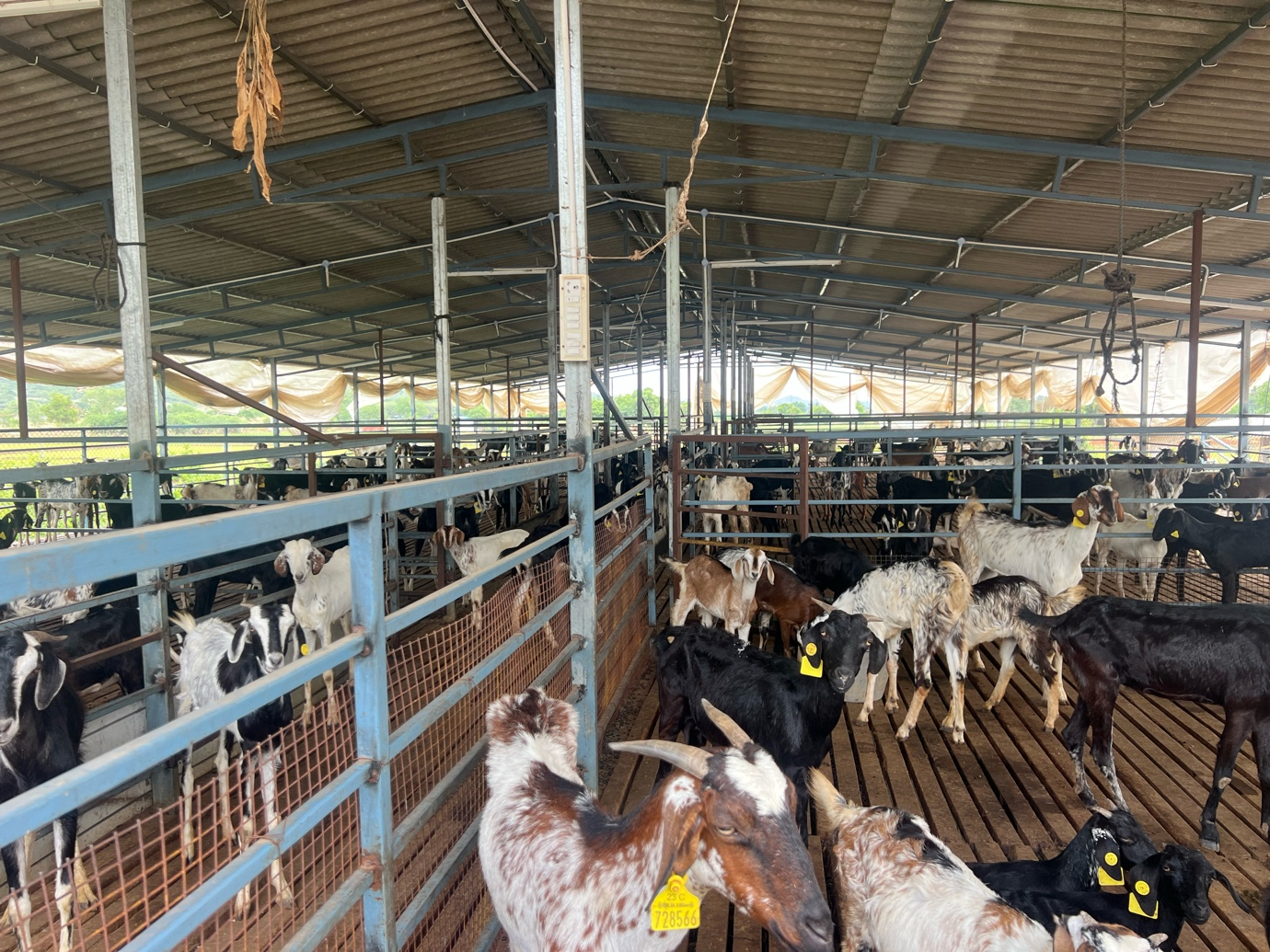
The Renaissance of Commercial Goat Farming in India
Dr.M.S.Saravanan B.V.Sc.,M.A.,PGDCM.,LMDE.,
Deputy Director of Animal Husbandry
Cattle Breeding and Fodder Development
Viruthunagar District,Tamilnadu
Abstract
Commercial goat farming in India has transcended its traditional status as a “subsistence activity” to become a high-tech, data-driven agribusiness. Driven by shrinking grazing lands, rising health consciousness among consumers, and robust government interventions like the National Livestock Mission (NLM), the sector is currently experiencing a compound annual growth rate (CAGR) of 12.77%. This article explores the transition from extensive scavenging to intensive stall-feeding systems, the economic viability of precision breeding, and the integration of digital traceability (Blockchain and IoT) to meet global export standards.
Introduction
The Paradigm Shift
Historically labeled the “Poor Man’s Cow,” the goat (Capra hircus) served as a living savings account for rural households. Traditional management was characterized by zero-input scavenging, random mating, and high kid mortality rates (20–40%).
Current Trends:
As of 2025–2026, India holds the largest goat population in the world, with approximately 153.8 million head, closely followed by China.
Often referred to as the “poor person’s cow,” the goat plays a disproportionately large role in the rural and national economies of developing nations. Its significance can be broken down into several key economic pillars:
Poverty Alleviation & Rural Livelihoods
In India alone, approximately 20 million small and marginal farmers and landless laborers depend on goats for their primary or supplementary income.
Low Capital Entry:
Unlike cattle, goats require minimal initial investment and low maintenance costs, making them accessible to the most vulnerable economic groups.
“Living Bank”:
Goats act as a liquid asset. Rural families often sell a goat to cover sudden expenses like medical bills, school fees, or crop failures, providing a vital safety net.
Contribution to GDP and Agriculture:
The goat sector is a powerhouse within the broader livestock industry:
Economic Value:
In India, the goat sector contributes over ₹14,400 crore (approx. $1.7 billion USD) annually to the agricultural economy.
Gross Value Added (GVA):
It accounts for roughly 8–10% of the total GVA from the livestock sector in many agrarian economies.
Food Security & Nutritional Economy:
Goats are a major source of high-quality protein, especially in regions where large-scale cattle farming is ecologically or economically unviable.
Meat Production:
India ranks 2nd globally in goat meat production. The high demand for “chevon” (goat meat) ensures a steady market and consistent cash flow for farmers.
Dairy Significance:
India is the world leader in goat milk production. While often consumed locally, there is a growing niche market for goat milk due to its digestibility and use in treating specific health conditions (like boosting platelet counts during dengue outbreaks).
Employment & Gender Empowerment
Rural Employment:
The sector generates approximately 4% of total rural employment.
Women’s Empowerment:
In many cultures, goat rearing is managed primarily by women. This provides them with direct control over household finances and improves their socio-economic status within the community.
Industrial By-products
Beyond food, goats contribute to the leather and textile industries:
Skins and Hides:
Goat skins are highly valued for the production of high-quality leather goods, including gloves, shoes, and bookbinding’s.
Fiber:
Specific breeds, such as the Pashmina (Changthangi) in India and various breeds in China, produce luxury fibers like Cashmere, which are high-value export commodities.
Resilience & Climate Adaptation:
Economically, goats are “climate-smart” assets. They are highly adaptable to harsh environments, can graze on poor-quality forage, and have high reproductive rates (frequent twinning). This makes the goat industry more resilient to the environmental shocks that often devastate other forms of agriculture.
Key Fact:
While India leads in total numbers, China leads the world in goat meat exports and industrial-scale processing, highlighting a shift from subsistence farming to a highly organized commercial economy.
Beyond 2026:
By 2026, the industry has pivoted toward Professionalized Agri-Entrepreneurship. The “Modern Era” is defined by:
Intensive Housing:
Transition to elevated slatted floors to mitigate land scarcity.
Purebred Focus:
Prioritizing indigenous breeds (Sirohi, Barbari, Jamunapari) for breeding stock.
Weight-Based Pricing:
Moving away from “hand-estimation” to live body weight sales (₹350–₹600/kg).
Market Dynamics and Economic Impact:
India ranks 2nd globally in goat meat production (1.5 Million Tons annually) and is the world’s largest producer of goat milk.
Key Statistical Indicators (2026 Forecast)
Parameter | Status/Value |
Animal Husbandry Market Value :INR 1,323.1 Billion (Projected 2025-2034 growth)
Primary Production System :Shift from Extensive to Semi-Intensive/Stall-fed
Data Collection : 21st Livestock Census (100% Digital/Geospatial)
Registered Breeds :37+ Indigenous Breeds
The “Smart Guardianship” Model:
Technology and Precision
The 2026 landscape is defined by “Precision Livestock Farming” (PLF).
Genomic Selection:
Widespread use of Artificial Insemination (AI) to enhance twinning rates and meat yield.
IoT & Early Warning:
Wearable sensors monitor rumen pH and movement to detect subclinical ketosis or early pregnancy dyspepsia.
Digital Traceability:
Blockchain-enabled records facilitate “Farm-to-Fork” tracking, a prerequisite for premium exports to the Middle East (UAE, Qatar, Bahrain).
Unit Economics: Profitability Analysis:
Commercial viability is contingent on the Stall-Feeding Model. For a standard unit of 100 breeding goats, the ROI typically ranges between 30–45%.
Financial Breakdown (Per 100 Goats)
* Capital Investment: ₹8–12 Lakhs (Infrastructure + Quality Stock).
* Operating Expenditure: ₹5.5–6 Lakhs (Feed, Healthcare, Labor).
* Revenue Streams: * Meat/Kids: ₹5–7 Lakhs (120–150 kids/annum).
* Breeding Stock: Premium bucks fetch 2x meat value.
* By-products: Manure sales contribute ~₹20,000/annum.
* Net Profit: Estimated at ₹3,000–4,000 per doe per year.
Strategic Bio-Security:
The Disease-Free Venture
Profitability in 2026 is built on Prevention-Based Management. A single outbreak of PPR or FMD can eliminate 70% of profit margins.
The Bio-Security Blueprint
Elevated Slatted Flooring:
Reduces internal parasite loads by 80% by eliminating contact with manure.
The “Big Three” Vaccination:
Non-negotiable schedule for PPR, Enterotoxemia (ET), and Foot and Mouth Disease (FMD).
Quarantine Protocol:
Mandatory 21–30 day isolation for new stock.
Strategic Deworming:
Utilizing the FAMACHA© system to prevent drug resistance.
Government Policy:
National Livestock Mission (NLM)
The NLM Entrepreneurship Development Programme (EDP) provides a 50% Credit-Linked Subsidy (up to ₹50 Lakhs) to establish commercial breeding farms.
NLM Subsidy Tiers
Unit Size (Females + Males) ,Max. Subsidy ,Infrastructure Requirement :
100 + 5 : ₹10 Lakhs ( Basic Professional Shed )
300 + 15 :₹30 Lakhs (Detailed Project Report (DPR) + Fodder Land )
500 + 25 :₹50 Lakhs (Full Entrepreneurial Unit + Automation )
Applications are processed via the NLM Udyamimitra Portal, requiring digital KYC, a healthy CIBIL score, and a technical training certificate (e.g., from ICAR-CIRG).
Role in Global Food Security:
Goats are categorized as “Climate-Smart Livestock” due to:
Resource Efficiency:
High conversion of low-quality scrub into A2 milk and lean protein (Chevon).
Low Water Footprint:
Significantly lower than bovine counterparts.
Resilience:
High heat tolerance and short gestation (150 days) allow for rapid population recovery post-environmental stress.
Conclusion and Future Outlook
By 2026, the integration of indigenous breeds like the Kanni Aadu or Barbari into commercial systems has solidified India’s position in the “Clean Label” protein market. However, challenges remain, specifically the 57% Middlemen Dominance in marketing and rising feed costs. To thrive, future entrepreneurs must prioritize Antimicrobial Stewardship and Integrated Fodder Value-Addition (Silage/TMR blocks).
The “Smart Guardianship” Model: Precision Livestock Farming (PLF)
The 2026 technological landscape is defined by the integration of PLF to optimize the Feed Conversion Ratio (FCR).
Genomic Selection & AI:
Widespread use of Artificial Insemination (AI) using frozen semen straws from superior, performance-tested bucks is reducing generation intervals.
Automated Monitoring:
IoT-based wearable sensors are now standard in commercial units. These devices monitor rumen pH, temperature, and activity, allowing early detection of subclinical ketosis or pregnancy-related metabolic disorders before they impact production.
Digital Traceability:
Blockchain-enabled digital registers provide “Farm-to-Fork” transparency. This is a non-negotiable prerequisite for premium exports to Middle Eastern markets, which demand strict adherence to Halal and sanitary standards.
Strategic Bio-Security: The Prevention-First Blueprint
Profitability is contingent on mitigating the risk of catastrophic outbreaks (PPR, FMD, Enterotoxemia).
Engineering for Health: Elevated slatted flooring is the industry standard, reducing internal parasite burdens by up to 80% by breaking the manure-contact cycle.
The “One Health” Integration: As veterinarians, we must view goat health as a pillar of public health. By implementing stringent bio-security (30-day quarantine for new stock, regular vaccination schedules), we prevent zoonotic transmission and reduce the reliance on blanket antibiotic use, thereby mitigating Antimicrobial Resistance (AMR).
Systemic Deworming: Implementation of the FAMACHA© (FAMACHA Eye Chart) system allows for targeted deworming, preventing anthelmintic resistance in endemic parasitic zones.
Overcoming the “Middlemen Dominance” (57% Market Share)
A primary challenge remains the fragmented supply chain. To thrive, the industry must transition from individual selling to Farmer Producer Organizations (FPOs).
Collective Bargaining:
FPOs allow smallholders to aggregate produce, standardizing the weight and quality of stock. This scale allows them to negotiate directly with slaughterhouses and retail chains, bypassing the layers of brokers that currently erode 57% of potential profit margins.
Value-Added Processing:
Integration of local processing—such as producing high-quality chevon cuts, cured leather, or shelf-stable goat milk products—allows farmers to capture the “value-added” premium rather than selling live animals at lower, unstandardized rates.
The Roadmap to 2030
The path forward for Indian goat entrepreneurs lies in:
- Antimicrobial Stewardship: Prioritizing vaccine-led prevention.
- Integrated Fodder Value-Addition: Investing in silage/TMR blocks to buffer against seasonal feed shortages.
- Climate-Smart Resilience: Capitalizing on the goat’s low water footprint and high heat tolerance to adapt to changing environmental conditions.
The future of the sector is not merely in raising more goats, but in raising better goats through data, disease prevention, and organized market access.















