
Valorization of Citrus Waste into Farm Animal Feed: Way Forward towards a Circular Bioeconomy
Lamella Ojha1*, Sangeeta Bhattacharyya2, Panch Kishore Bharti3, Pratapa M G4
1Scientist, Animal Nutrition, ICAR-Mahatma Gandhi Integrated Farming Research Institute, Motihari-845429, Bihar
2Scientist, Agricultural Extension, ICAR-Central Citrus Research Institute, Nagpur-440033, Maharashtra
3Scientist, Livestock Production & Management, ICAR-Mahatma Gandhi Integrated Farming Research Institute, Motihari-845429, Bihar
4Scientist, Fish Health, ICAR-Mahatma Gandhi Integrated Farming Research Institute, Motihari-845429, Bihar
*Corresponding author email: lamellaojha@gmail.com
Introduction
Horticultural produce comprise an integral part of not only global agri-food system but also food basket of consumers ensuring nutritional security in households. In 2026, global horticultural produce is experiencing rapid growth, with the greenhouse horticulture market expected to rise to approximately $40.16 billion at a compound annual growth rate (CAGR) of 11.3% (Research and Markets, 2026).The horticulture sector in India too is contributing significantly to country’s agricultural Gross Value Added (GVA). India is currently producing about 370.73 million tons of horticulture produce which has surpassed the food grain production, that too from much less area (MoAg&FW, 2026). This significant contribution demonstrates the sector’s vital role in the Indian economy as it also drives rural employment, diversifies farming activities, and enhances farmers’ income, contributing to overall economic growth. Almost the horticultural products, the fruit crops constitute the most colourful, tastiest and refreshing part of the food basket which also holds immense potential for value addition and processing.
Citrus: the tangy and nutritious fruit crop
The Indian fruit basket without the tangy flavoured citrus fruit is a thing unimaginable. Especially after global pandemic of Covid-19, the importance of inclusion of vitamin C rich fruits in food basket has increased manifolds. In India, citrus is the third most cultivated fruit crop after banana and mango. Even globally, India ranks third in citrus production after China and Brazil. The genus Citrus belongs to the family Rutaceae. Citrus fruits have distinct aroma, taste and are storehouses of several important nutrients like vitamin C, phytochemicals and dietary fibres which are of vital importance in human health improvement due to their antioxidant properties and protection from various chronic diseases (Liu et.al., 2012).In 2025-26 the total citrus production (Table 1) in the country is estimated to be 14.52 million tonnes (MoAg&FW, 2026).
Table 1: Area and Production of Citrus in India (Area in ‘000 Ha Production in ‘000 MT)
| Sl.No. | Crop | 2023-24
(Final) |
2024-25
(Final) |
2025-26
(First Advance Estimates) |
|||
| Citrus | Area | Production | Area | Production | Area | Production | |
| 1 | Lime/lemon | 319 | 3836 | 299 | 3653 | 295 | 3657 |
| 2 | Mandarin | 474 | 6076 | 502 | 6729 | 494 | 6458 |
| 3 | Sweet orange | 240 | 3852 | 242 | 3905 | 234 | 3843 |
| 4 | Other citrus | 93 | 789 | 83 | 584 | 79 | 571 |
| Citrus total (1-4) | 1126 | 14553 | 1125 | 14870 | 1102 | 14528 | |
Source: Ministry of Agriculture and Farmers Welfare, Govt. of India (2026)
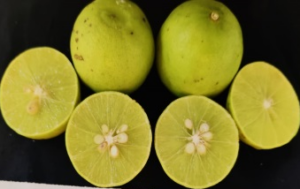
diverse array of species (Table 2) can be found within this citrus genus across the globe, but in India, the commercially significant ones that are produced include mandarins (santra), sweet oranges (mosambi), acid limes (nimbu), lemons, grapefruits, and pummelos (Bhattacharyya et.al., 2025). Mandarins (Citrus reticulata Blanco) are the most abundantly produced cultivars in India (Table 1).
Table 2: Commercial citrus cultivarsof India
| Commercial Cultivars (Local name) | Sci.name | Illustration |
| Mandarin (Santra)
|
Citrus reticulata Blanco |
Fig.1: Nagpur Mandarin fruit |
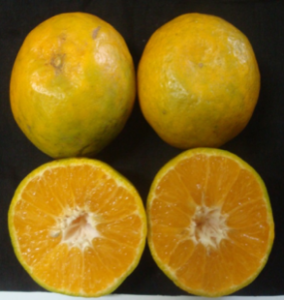
| Sweet Orange (Mosambi)
|
Citrus sinensis Osbeck |
Fig. 2: Fruit of Mosambi (sweet orange) |
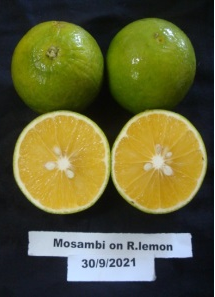
| Acid Lime (Nimbu)
|
Citrus aurantifolia Swingle |
Fig.3: NRCC-8 variety of Acid Lime |
| Lemon
|
Citrus limon (L.) Osbeck | 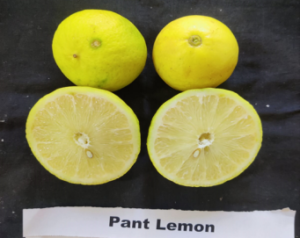
Fig.4: Fruit of Pant Lemon variety |
| Pummelo
|
C. grandis Osbeck syn.
C. maxima (Burm.) Merr. |
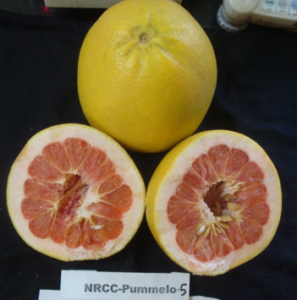
Fig.5: Fruit of NRCC-Pummelo-5 variety |
| Grapefruit
|
Citrus paradise Macfadyne | 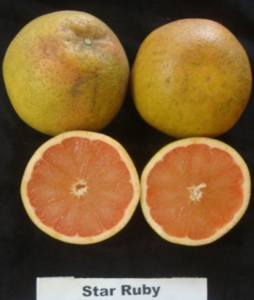
Fig.6: Fruit of Star Ruby variety of Grapefruit |

Source: Compiled from Bhattacharyya et.al., 2025
Post harvest loss, citrus processing and generation of citrus waste
India, the country with rich biodiversity of horticultural crops is projected to produce 370.84 million tonnes of total horticultural produce in year 2025-26 out of which the fruit crop production is expected to rise from 117.64 million tonnes to 118.68 million tonnes (MoAg&FW, 2026).However, the post-harvest losses in horticulture has been one of the biggest challenges in the value chain of this sector. And the post-harvest loss in fruit crop sector is as huge as 7.36 million tonnes as per NABCONS study of year 2022 (PIB, 2025). Out of this, citrus fruits face a 5.53% loss in farm operations itself and 2.18% total loss at market level. Often post-harvest losses are unavoidable but to a great extent can be reduced through timely processing and value addition. However during processing, the agro-food or industries generate a lot of by-products or waste which is no longer suitable for human consumption. Among the most prevalent residues of agro-industries is citrus processing waste (CPW), a mixture of peel, pulp, and seeds, generated during juice extraction and other industrial applications (AlZahabi and Mamdouh, 2025). Instead of disposing the waste, a more sustainable yet unconventional and highly remunerative option is waste valorization or upcycling. And one of the most popular valorized product is high value animal feed which serves as a crucial input for livestock sector.
Valorization of citrus waste as animal feed: promoting circular bioeconomy
Amongst, waste valorization technologies, the utilization of by-products generated from crop, fruit, and vegetable processing in animal feeding is gaining attention globally as an effective way to reduce foodwastage. It also offers environmental benefits by ensuring better utilization of available feed resources. Among these, citrus wastes are increasingly being recognized as valuable alternatives to conventional ruminant feed resources, mainly due to the rising cost of their disposal in many parts of the world. Common citrus by-products used in ruminant feeding include fresh citrus pulp, citrus silage, dried citrus pulp, citrus meal and fines, citrus molasses, citrus peel liquor, and citrus-activated sludge (Habeeb, 2008).
Citrus fruits are mainly consumed by humans either as fresh fruits or in processed forms such as fresh chilled or concentrated juice. Juice extraction generates a large amount of residue consisting of peel, pulp, rag, and seeds. These components serve as the basic raw materials for the production of citrus by-product feedstuffs, either individually or in different combinations. Wet citrus pulp is the major by-product of the citrus processing industry, whereas dried citrus pulp is produced after processing fresh peel, pulp, and seeds through peeling, liming, pressing, and drying (Bampidis and Robinson, 2006).
The major citrus waste obtained after juice extraction include fresh citrus pulp, which represents the entire residue left after juice removal. Depending on fruit type, processing method, and environmental conditions, citrus pulp-comprising peel, internal tissues, seeds, and culled fruits-constitutes nearly 50–65% of the total fruit weight (Arthington et al., 2002).This residue generally contains 60-65% peel, 30-35% pulp, and 0-10 % seeds on a dry matter basis. Processed citrus by-product feedstuffs are prepared by shredding, liming, pressing, and drying these residues to approximately 80 g/kg moisture.
Valorization of citrus waste promotes environmental sustainability because proper management reduces waste disposal issues (such as landfilling or incineration) and reduces water and soil pollution.It is also economical as it turns a waste disposal cost into a source of revenue, supporting a “zero-waste” or “near zero-waste” goal.This approach aligns with circular bioeconomy principles by minimizing waste and reusing organic by-products.The bioeconomy is an economic system that uses renewable biological resources—such as plants, animals, microbes, and organic waste—to produce food, energy, materials, and services. It aims to drive sustainable development by reducing dependence on fossil fuels, cutting greenhouse gas emissions, and creating a circular economy.Livestock farming plays a central role in the circular bioeconomy, thanks to its capacity to manage and process residues and co-products from agricultural activities, recycling resources that would otherwise be disposed of as waste (Dongo and Penna, 2026). Livestock enables genuine upcycling of materials not edible by humans, transforming them into animal-source protein foods. In case of citrus waste being valorized into animal feed, the principle of circular bioeconomy is upheld by the idea of zero-waste and the animal waste which is generated is recycled back into the soil as fertilizer. The dung and animal waste which is by-product of livestock farming, is used as farmyard manure and other soluble organic fertilizers, for example, jeevamrut for applying in soil to increase soil fertility and organic carbon content of citrus orchards, thus completing the cycle (Fig. 1). The approach is sustainable, environment friendly and the need of the hour in the wake of organic carbon depletion from soil. By reducing reliance on food crops for feed, more land can be used to grow food for direct human consumption. Also, decomposed animal waste when applied as organic manure to crops, result in fertile soil and increased yield of crops thus ensuring food security. Circular bioeconomy minimizes the environmental footprint of agricultural systems by converting “waste” into a valuable resource, thus it is a sustainable approach. It is also economically remunerative as it converts waste disposal costs into income streams by producing marketable animal feed (Fig. 7).
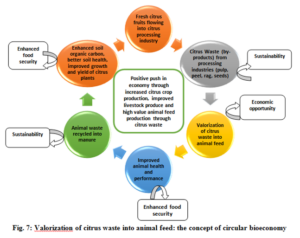
Fig. 7: Valorization of citrus waste into animal feed: the concept of circular bioeconomy
Nutritional Composition of Citrus waste
Citrus pulp possesses high nutritional value due to its abundance of rapidly fermentable carbohydrates. However, its high moisture content (about 80%) makes it bulky and difficult to store or transport. It is generally low in nitrogen, and its protein content is characterized by low digestibility and biological value (Fegeros et al., 1995). At the same time, it is rich in readily fermentable substrates such as sugars, non-starch polysaccharides, and organic acids. These characteristics make citrus pulp highly suitable for ensiling with high dry matter cereal crop residues such as wheat straw.
Nutritionally, citrus pulp contains important components including soluble pectin (20-40 % DM), sugars (~16.9 % DM), cellulose (~9.21 % DM), and hemicelluloses (~% g DM) (Chavan et al., 2018). It also contains several bioactive secondary metabolites such as flavonoids, alkaloids, limonoids, coumarins, carotenoids, phenolic acids, ascorbic acid and essential oils (Lv et al., 2015). In addition, citrus pulp contains a high proportion of polyunsaturated fatty acids (PUFAs), particularly linoleic acid, which constitutes 15–45% of total fatty acids (Zaidun et al., 2018). The total phenolic content in citrus pulp ranges from 8.25 to 397 mg gallic acid equivalent /g of extract (Nakajima et al., 2019), while flavonoid content ranges from 0.3 to 31.1 mg quercetin equivalent/g of powder (Nakajima et al., 2019, Klimek-Szczykutowiczet al., 2020). The ascorbic acid content varies between 18.2 and 46.2 mg/100 mL (Nakajima et al., 2019).A notable nutritional limitation of citrus by-products is their wide Ca:P ratio (11.5), which results from high calcium content (0.92%) and low phosphorus content (0.08%).
Methods of valorization
Fresh citrus waste contains high moisture and deteriorates rapidly, making proper processing essential before its use in animal feeding. Common methods for its utilization include dehydration, sun drying, ensiling, production of citrus molasses, and preparation of densified feed blocks (Kour et al., 2016; Malla et al., 2015). Chaudhary et al. (2017) also reported that kinnow waste can be effectively fed to animals in sun-dried form or as densified feed blocks prepared with wheat or paddy straw.
Ensiling of citrus waste is a simple and practical method that can be adopted by farmers under various climatic conditions. The resulting silage is readily consumed by animals due to its pleasant fruity aroma. To reduce ensiling losses associated with high moisture content, citrus pulp has been successfully ensiled with chopped wheat straw in an 80:20 DM ratio. Lambs fed citrus pulp silage along with concentrate showed acceptable carcass and meat quality traits, and the authors concluded that citrus pulp silage was economically beneficial for lamb production (Scerra, et al., 2001).Wadhwa et al. (2020) concluded that kinnow by-product ensiled with wheat straw can be safely included up to 25% of the ration on a DM basis in buffalo calves.
Citrus pulp can also be preserved through drying to improve its storage life and feeding value. However, direct drying is difficult because of its sticky nature. This problem can be minimized by adding lime, which reduces the hydrophilic nature of pectin present in the waste. Since drying equipment is expensive, this method is economically feasible only when large quantities of waste are available. Dried citrus pulp has been used as a major energy source for beef cattle and heifers, constituting up to 45% of calf diets. However, excessive inclusion is not recommended for lactating cows as it may reduce milk production. It has also been reported that inclusion levels above 30% of the ration reduce digestibility in sheep.
Citrus molasses is produced by concentrating the liquid extracted during citrus waste pressing. It contains 9-15% soluble solids, of which 60-75% are sugars. It is generally a thick, viscous liquid with a dark brown to black in color and a strong taste. Despite this, its feeding value for cattle is comparable to sugarcane molasses. It can also be mixed with pressed pulp before drying to enhance the energy content of the final product without affecting shelf life. Cattle can consume up to 3 kg per day when offered free choice (Bampidis and Robinson, 2006).
Chen et al. (1981) evaluated citrus condensed molasses soluble as an energy source for ruminants by replacing corn, sugarcane molasses, and dried citrus pulp. The results showed no significant differences in body weight gain, feed conversion ratio, or carcass characteristics in steers. In lambs, higher levels reduced body weight gain, although dry matter intake remained unchanged. Overall, replacement of corn and wheat grains with citrus by-products resulted in comparable growth performance in ruminants. Similarly, Scerra et al. (2001) reported positive effects of citrus pulp silage on lamb growth and carcass characteristics.
Important considerations when using citrus waste in animal feeding
Although citrus wastes have considerable potential as an alternative feed resource, certain nutritional limitations must be considered for their effective utilization in animal feeding. Proper supplementation and balanced ration formulation are essential to maximize their feeding value and avoid nutritional imbalances. The digestibility of citrus waste or byproduct ranges from 37% to 70%. In diets containing protein-rich forages, high levels of citrus waste may reduce overall protein digestibility. Its low soluble nitrogen content may also lower rumen ammonia levels. Supplementation with ammonia or urea can be a useful strategy for improved overall protein quality of the diet. The highly fermentable carbohydrates present in citrus byproduct may promote more efficient utilization by rumen bacteria (Bampidis and Robinson, 2006). However, true protein sources may be more effective. The Ca:P ratio is wide due to the low phosphorus content of citrus waste; therefore, phosphorus supplementation is important for balanced diets containing citrus waste. Citrus waste is also low in vitamin A. Hence, green leafy roughage is an important component of rations containing high levels of CP (Kour et al., 2017).
Effects of citrus waste on animal performance
Citrus waste have gained considerable attention as alternative feed resources for growing animals due to their high energy content and availability. Several studies have evaluated their effects on growth performance, feed efficiency, and overall animal health in different livestock species.
In an experiment conducted by Villarreal, et al. (2011) on crossbred calves, a regular diet was compared with a byproduct-containing ration that included tomato pulp, citrus pulp, potato waste, and pea pods. The findings revealed that body weight gain was comparable between the groups. However, the byproduct-containing ration significantly reduced Glutamate Pyruvate Transaminase and Gamma Glutamyl Transferase enzyme activities, while increasing globulin content. The authors concluded that feeding the byproduct-containing ration was preferable, particularly during hot weather.
Compared with conventional feeding, buffalo calves fed rations containing citrus wastes and pea pods showed higher body weight gain, improved feed efficiency, and lower daily feeding costs (Lashin et al., 1995, Omer and Tawila, 2009).
In Friesian heifers, replacing half of the corn grain with dried citrus pulp had no adverse effect on body weight (Villarreal, et al., 2006). Similarly, cattle fed citrus pulp along with adequate protein and other essential nutrients showed no significant differences in weight gain (Lashin et al., 1995).
Studies in goats have demonstrated the effective utilization of citrus waste in feeding systems. Bakshi et al. (2020) reported that goat bucks readily consumed a total mixed ration containing sun-dried kinnow by-product, ground empty pea pods, and berseem hay in a 50:25:25 ratio on a DM basis. Similarly, Malla et al. (2015) concluded that adult male goats can be successfully maintained on kinnow waste silage without any adverse effects on nutrient intake, nutrient utilization, or overall performance.
Citrus waste also exerts beneficial health effects in animals, as citrus peel and pulp possess natural antimicrobial properties. Their inclusion in ruminant diets has been reported to reduce ruminal populations of food-borne pathogens such as Escherichia coli O157:H7 and Salmonella typhimurium(Callaway et al., 2011).
Kour et al. (2016) reported that inclusion of dried kinnow waste widened the Ca:P ratio due to its high calcium content, indicating that careful attention is required to maintain a balanced Ca:P ratio in the ration. However, its inclusion showed no adverse effects on the general health of goats, as reflected by blood biochemical parameters.
Influence of citrus waste on milk production in animals
Citrus waste is an important alternative feed resource for dairy animals. It can be included up to 20% of total diet DM; however, higher inclusion levels may adversely affect milk composition, diet digestibility, and dry matter intake. The use of dried citrus pulp at 20% DM showed no significant effect on dry matter intake, milk yield, or milk protein content (Arthington et al., 2012). Similarly, digestibility and rumen fermentation parameters remained unchanged at inclusion levels below 20%.
Although no significant differences in ruminal parameters were observed between 20% and 24% inclusion levels in mixed dairy feeds, milk yield and milk protein content tended to decrease at higher inclusion levels, while milk fat content either remained unchanged or increased.
According to Fegeros et al. (1995) and Assis et al. (2004), dried citrus pulp containing peels can be included as a partial substitute for concentrate at levels of 30% in lactating dairy cattle and 20% in lactating ewes without negatively affecting dry matter intake, rumen fermentation characteristics, digestibility, milk production, or milk composition.
Van Horn et al. (1997) reported that total mixed rations containing high maize grain and high dried citrus pulp produced similar effects on feed intake, milk yield, and milk protein content in lactating dairy cows.
In another study, Volanis et al. (2004) evaluated ensiled sliced citrus in lactating dairy sheep by replacing part of the maize grain, soybean meal, and oat hay ration. The results showed reduced milk yield and milk protein concentration; however, milk fat content increased by 16% in the citrus silage-fed group.
Conclusion
To be true, no part of citrus is a waste if correct method of valorization finds it. Conversion of citrus by-products to animal feed is a sustainable, economical option. Valorization of such an agro-industrial waste enhances circularity and promotes sustainable feeding with respect to environmental protection. The financial losses incurred by citrus growers can also be significantly reduced through valorization process. It is high time to make agriculture integrated, smart, commercial, as well as sustainable with circularity. In this aspect, secondary agriculture processes like valorization plays a major role in enhancing farm income and ensuring livelihood through circular bioeconomy.
References
- AlZahabi, S. and Mamdouh, W. (2025). Valorization of citrus processing waste into high-performance bionanomaterials: green synthesis, biomedicine, and environmental remediation. RSC Advances, 15(43):36534-36595. DOI: 10.1039/d5ra04307g. PMID: 41048549; PMCID: PMC12495416.
- Arthington, J. D., Kunkle, W. E., & Martin, A. M. (2002). Citrus pulp for cattle.Veterinary Clinics: Food Animal Practice, 18(2), 317-326.
- Assis, A. J. D., Campos, J. M. D. S., Valadares Filho, S. D. C., Queiroz, A. C. D., Lana, R. D. P., Euclydes, R. F., … & Mendonça, S. D. S. (2004). Citrus pulp in diets for milking cows. 1. Intake of nutrients, milk production and composition.Revista Brasileira de Zootecnia, 33, 242-250.
- Bakshi, M. P. S., Hundal, J. S., & Wadhwa, M. (2020). In vitro evaluation of kinnow waste as substitute of cereal grains in the concentrate mixture and empty pea pods as that of berseem hay in total mixed ration for livestock.Indian Journal of Animal Sciences, 90(3), 439-445.
- Bampidis, V. A., & Robinson, P. H. (2006). Citrus by-products as ruminant feeds: A review.Animal feed science and technology, 128(3-4), 175-217.
- Bhattacharyya, S.,Roy, S.S., Ghosh, D. (2025). Citrus Industry of India. Inbook: Asian Citrus Industry: Growth and Sustainability edited by DilipGhosh, Kwan Jeong Song, Sangeeta Bhattacharyya, SubhraSaikat Roy and ChandrikaRamadugu. Publisher: CRC Press, United States. ISBN: 9781032894669. DOI: 10.1201/9781003584599
- Callaway, T. R., Carroll, J. A., Arthington, J. D., Edrington, T. S., Rossman, M. L., Carr, M. A., … & Nisbet, D. J. (2011). Escherichia coli O157: H7 populations in ruminants can be reduced by orange peel product feeding.Journal of Food Protection, 74(11), 1917-1921.
- Chaudhary, S., Rastogi, A., Sharma, R. K., Raghuwanshi, P., & Khan, N. (2017). Formulation of kinnow mandarin (Citrus nobilis Lour x Citrus deliciosa Tenora) waste and paddy straw based complete feed blocks and its utilization by goats. J. Anim. Res, 51, 105-110.
- Chen, M. C., Ammerman, C. B., Henry, P. R., Palmer, A. Z., & Long, S. K. (1981). Citrus condensed molasses solubles as an energy source for ruminants.Journal of Animal Science, 53(1), 253-259.
- Dongo, D. And Penna, A.A.D. (2026). Livestock and circular bioeconomy: FAO guidelines. Food times. https://www.foodtimes.eu/food-system/livestock-circular-bioeconomy-co-products/ Accessed on 14thMay, 2025.
- Fegeros, K., Zervas, G., Stamouli, S., &Apostolaki, E. (1995). Nutritive value of dried citrus pulp and its effect on milk yield and milk composition of lactating ewes.Journal of Dairy Science, 78(5), 1116-1121.
- Habeeb, A. A. M. (2023). Importance of utilization of citrus by-product waste in ruminant animal nutrition.Indiana Journal of Agriculture and Life Sciences, 3(4), 1-9.
- Klimek-Szczykutowicz, M., Szopa, A., & Ekiert, H. (2020). Citrus limon (Lemon) phenomenon—a review of the chemistry, pharmacological properties, applications in the modern pharmaceutical, food, and cosmetics industries, and biotechnological studies.Plants, 9(1), 119.
- Kour, R., Rastogi, A., Sharma, R. K., & Singh, M. (2016). Evaluation of kinnow mandarin fruit waste in rations of goats.Indian J Anim Nutr, 33(4), 416-420.
- Lashin ME, EA Saad, HA Salama, et al. (1995). Use of citrus wastes, pea pods and artichoke as silage for feeding buffalo calves. Proc 5th SciConfAnimal Nutrition,1:137‒144.
- Liu, Y.Q., Heying, E., and Tanumihardjo, S.E.(2012). History, global distribution and nutritional importance of citrus fruits. Comprehensive Reviews in Food Science and Food Safety,11:530-545.
- Lv, X., Zhao, S., Ning, Z., Zeng, H., Shu, Y., Tao, O., … & Liu, Y. (2015). Citrus fruits as a treasure trove of active natural metabolites that potentially provide benefits for human health.Chemistry Central Journal, 9(1), 68.
- Malla, B. A., Rastogi, A., Sharma, R. K., Ahmad, I., Tariq, H., & Farooq, J. (2015). Effect of Kinnow Mandarin (Citrus Nobilis Lour× Citrus Deliciosa Tenora) Fruit Waste Silage on Nutrient Intake, Digestibility and Performance of Goat Bucks.Journal of Animal Research, 5(2), 303.
- Ministry of Agriculture and Farmers’ Welfare (2026). Area and Production of Horticulture crops for 2025-26 (1st Advance Estimates). Department of Agriculture and Farmers’ Welfare. Ministry of Agriculture and Farmers’ Welfare, Government of India, New Delhi.
- Nakajima, A., &Ohizumi, Y. (2019). Potential benefits of nobiletin, a citrus flavonoid, against Alzheimer’s disease and Parkinson’s disease.International journal of molecular sciences, 20(14), 3380.
- Orner, H. A. A., & Tawila, M. A. (2009). Response of Baladi goats to diets containing different levels of citrus by-product.
- Press Information Bureau (2025). NABCONS Study Assesses Post-Harvest Losses Across 54 Crops During 2020–22. Ministry of Food Processing Industries, Government of India, New Delhi.
- Research and Markets (2026). Greenhouse Horticulture Market Report 2026. https://www.researchandmarkets.com/reports/5939855/greenhouse-horticulture-market-report. Accessed on 12th May, 2026.
- Scerra, V., Caparra, P., Foti, F., Lanza, M., & Priolo, A. (2001). Citrus pulp and wheat straw silage as an ingredient in lamb diets: effects on growth and carcass and meat quality.Small Ruminant Research, 40(1), 51-56.
- Van Horn, H. H., Marshall, S. P., Wilcox, C. J., Randel, P. F., & Wing, J. M. (1975). Complete rations for dairy cattle. III. Evaluation of protein percent and quality, and citrus pulp-corn substitutions.Journal of Dairy Science, 58(8), 1101-1108.
- Villarreal, M., Cochran, R. C., Rojas-Bourrillón, A., Murillo, O., Muñoz, H., & Poore, M. (2006). Effect of supplementation with pelleted citrus pulp on digestibility and intake in beef cattle fed a tropical grass-based diet (Cynodonnlemfuensis).Animal Feed Science and Technology, 125(1-2), 163-173.
- Volanis, M., Zoiopoulos, P., &Tzerakis, K. (2004). Effects of feeding ensiled sliced oranges to lactating dairy sheep.Small Ruminant Research, 53(1-2), 15-21.
- Zaidun, N. H., Thent, Z. C., & Abd Latiff, A. (2018). Combating oxidative stress disorders with citrus flavonoid: Naringenin.Life sciences, 208, 111-122.