
Women Veterinarians Shaping Innovation in Animal Healthcare: Global Leaders Transforming Veterinary Science
Dr. Reshma Debbarma
Animal Physiology Division, ICAR–National Dairy Research Institute, Karnal, India
Email: debbarmareshma9@gmail.com
Abstract
The veterinary profession has witnessed a remarkable transformation in recent decades, with women emerging as leaders in research, innovation, and animal healthcare. Women veterinarians are contributing significantly to scientific discovery, disease diagnostics, animal welfare, and sustainable livestock management. Their work is shaping the future of veterinary medicine by integrating technological advancements with compassionate animal care. This article highlights the role of women veterinarians in driving innovation in animal healthcare systems globally. It explores contributions in veterinary diagnostics, precision livestock farming, animal welfare science, and public health while also presenting examples of internationally recognized women veterinary scientists. The increasing participation of women in veterinary education and research demonstrates the growing importance of gender diversity in strengthening scientific progress and sustainable livestock development.
Introduction
Veterinary science plays an essential role in maintaining animal health, ensuring food security, protecting public health, and supporting sustainable agricultural systems. Livestock production contributes significantly to rural livelihoods and national economies, particularly in developing countries where dairy and small ruminant farming support millions of households.
In recent decades the veterinary profession has experienced significant changes due to technological advancement, globalization, and emerging disease challenges. The growing threats of zoonotic diseases, antimicrobial resistance, and climate-related stress on animals have increased the need for skilled veterinary professionals.
One of the most notable developments in this transformation has been the increasing participation of women in veterinary education and professional practice. Women veterinarians are now contributing extensively to research, clinical practice, livestock extension, and veterinary public health. Their involvement has expanded the boundaries of veterinary science and introduced innovative approaches to animal healthcare.
By integrating scientific knowledge with communication skills and empathy toward animals and farmers, women veterinarians are helping shape modern veterinary medicine.
Evolution of Women in Veterinary Science
Historically, veterinary medicine was often perceived as a male-dominated profession due to the physically demanding nature of fieldwork and livestock handling. However, societal progress and improved access to higher education have significantly increased the participation of women in veterinary education.
Today, in many countries women represent a majority of veterinary students. Veterinary colleges across the world report increasing enrollment of female students in undergraduate, postgraduate, and doctoral programs. This shift reflects the growing recognition of women as capable leaders in animal healthcare and scientific research.
Women veterinarians now contribute to a wide range of professional fields including clinical veterinary practice, animal physiology research, veterinary microbiology, biotechnology, epidemiology, wildlife conservation, and livestock extension services. Their participation has strengthened veterinary science by bringing diverse perspectives, interdisciplinary collaboration, and innovative thinking.
Innovation in Veterinary Diagnostics
One of the most important areas where women veterinarians are shaping innovation is veterinary diagnostics. Early disease detection is critical for preventing productivity losses and ensuring animal welfare. Advances in molecular biology and biomedical technology have revolutionized disease diagnosis in animals.
Women veterinary researchers are actively involved in developing diagnostic tools such as polymerase chain reaction (PCR) assays, enzyme-linked immunosorbent assays (ELISA), biosensors, and imaging technologies. These methods enable rapid identification of pathogens and physiological abnormalities in livestock.
Early detection of diseases allows veterinarians to implement preventive strategies rather than relying solely on treatment after disease occurrence. This approach improves animal health outcomes while reducing economic losses for farmers.
Infrared Thermography in Animal Health
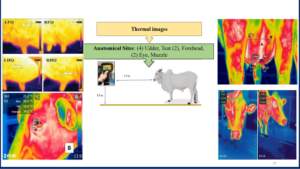
Thermal imaging is increasingly used in veterinary diagnostics for detecting mastitis, lameness, and inflammatory conditions in livestock. The technology allows veterinarians to monitor animals without physical contact, thereby minimizing stress and improving welfare.
This technology has gained importance in precision livestock farming systems where early disease detection plays a crucial role in herd health management.
Precision Livestock Farming
Precision Livestock Farming (PLF) refers to the use of digital technologies to monitor animal health and productivity in real time. Sensors, wearable devices, and automated monitoring systems collect data on animal behavior, feeding patterns, body temperature, and milk production.
Women veterinarians working in interdisciplinary research teams are contributing to the development of advanced livestock monitoring systems. These technologies enable farmers and veterinarians to detect health problems at an early stage, allowing timely intervention.
PLF technologies include smart collars, pedometers, automated milk analyzers, and artificial intelligence algorithms for disease prediction.
[Insert Image: Wearable Sensors for Monitoring Dairy Cow Health]
The integration of veterinary science with data analytics is transforming livestock management systems worldwide.
Animal Welfare Science
Animal welfare is a fundamental component of modern veterinary practice. Ensuring that animals are treated humanely and provided with appropriate living conditions is essential for ethical livestock production.
Women veterinarians have been strong advocates for animal welfare and humane livestock management practices. Their work has contributed to improvements in animal housing, stress reduction strategies, humane handling techniques, and welfare assessment protocols.
Animal welfare research has demonstrated that improved welfare conditions enhance productivity, reproductive performance, and disease resistance. As a result, welfare-oriented livestock management practices are increasingly being adopted worldwide.
Famous Women Veterinarians Who Changed the World
Dr. Mary Knight Dunlap
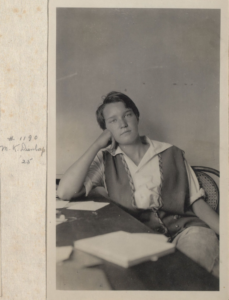
Dr. Mary Knight Dunlap was a pioneering American veterinary scientist who made important contributions to veterinary pathology and research.
Her work focused on infectious diseases affecting animals and their implications for human health. She contributed significantly to veterinary diagnostic research and laboratory disease investigations
Dr. Temple Grandin
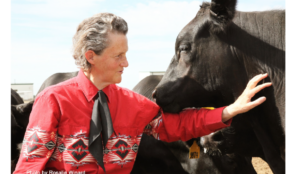
Dr. Temple Grandin is one of the most influential figures in the field of animal welfare. She is an American animal scientist known for designing humane livestock handling systems that reduce stress during transportation and slaughter. Her work revolutionized the livestock industry by demonstrating how animal behaviour science can improve welfare and productivity simultaneously. Grandin’s designs are widely used in livestock facilities
Dr. Sarah Cleaveland


Professor Sarah Cleaveland is a globally recognized veterinary epidemiologist whose work focuses on zoonotic diseases, particularly rabies. Her research in Africa has contributed to the development of effective rabies control strategies through mass dog vaccination programs. Her work demonstrates how veterinary science plays a critical role in protecting both animal and human health.
Inspiring Indian Women Veterinarians
Dr. Amita Patel

Dr. Amita Patel is a distinguished Indian veterinary scientist known for her significant contributions to animal genetics and dairy cattle improvement. She has been associated with research in dairy production and livestock breeding and has contributed extensively to improving the productivity of indigenous cattle through scientific breeding programs.
Her work has focused on strengthening dairy production systems through genetic improvement, better breeding strategies, and farmer-oriented research. Through her contributions in veterinary education and research, Dr. Patel has played an important role in promoting sustainable dairy development in India.
Dr. Indira Nath

Dr. Indira Nath is a renowned Indian immunologist whose research has contributed significantly to understanding immune responses to infectious diseases. Although primarily known for her work in human immunology, her research has influenced the broader field of biomedical and veterinary sciences, particularly in understanding host immune responses to pathogens.
Her work has helped advance knowledge related to disease resistance and immunological responses, which are important concepts in both veterinary and human health research. She is widely recognized for her contributions to scientific research and education in India
Women Veterinarians in Public Health
Veterinary professionals play an important role in protecting public health through the prevention of zoonotic diseases. Diseases such as rabies, brucellosis, avian influenza, and leptospirosis demonstrate the close connection between animal health and human health.
Women veterinarians participate in disease surveillance, epidemiological research, vaccination campaigns, and food safety monitoring. Their work supports the One Health approach, which recognizes the interconnected relationship between human, animal, and environmental health.
Future Opportunities
The future of veterinary medicine will be driven by technological innovation and interdisciplinary collaboration. Emerging areas such as genomic medicine, artificial intelligence, climate-resilient livestock production, and advanced vaccine technologies are expected to transform animal healthcare systems.
Women veterinarians are likely to play a central role in these developments through leadership in research and policy development. Encouraging greater participation of women in veterinary science will strengthen innovation and improve global animal healthcare systems.
Conclusion
Women veterinarians are transforming animal healthcare through innovation, research, and compassionate service. Their contributions to disease diagnostics, animal welfare, public health, and sustainable livestock production are strengthening global veterinary systems.
As more women enter veterinary education and leadership roles, their influence will continue to shape the future of veterinary medicine. Supporting gender equality in veterinary science will help build stronger healthcare systems for animals while improving farmer livelihoods and global food security.
References
Grandin T. (2014). Improving Animal Welfare: A Practical Approach. CABI Publishing.
FAO (2020).
The State of Food and Agriculture – Livestock Systems. Cleaveland S. et al. (2017).
Zoonotic disease control strategies. OIE (2021). Role of veterinarians in global animal health.