
Dairy based integrated farming system
Ranjana Sinha, Soni Kumari and Pramod Kumar
Assistant Professor, Bihar Veterinary College, BASU, Patna-14
Farmers largely depend on crop production, which is highly susceptible to uncertainties in income and employment due to inclement weather conditions. In this context, it is imperative to develop suitable strategies to enhance farm income and ensure livelihood security. The integration of various agricultural enterprises such as cropping, animal husbandry, fisheries and horticulture hold significant potential for strengthening the farmerl economy. These enterprises not only supplement farmers’ income but also generate additional employment opportunities for family labour. A dairy-based Integrated Farming System (IFS) represents a sustainable agricultural approach in which dairy farming is integrated with crop production and other allied enterprises such as poultry, fisheries, and biogas production. In this system, the outputs of one component serve as inputs for another, thereby promoting efficient resource utilization, enhancing productivity, and improving overall farm profitability.
Goal of Integrated Farming System (IFS)
The adoption of an Integrated Farming System (IFS) is essential to ensure sustainable and efficient agricultural production under varying agro-economic conditions. The key needs of IFS include:
- Efficient utilization of available farm resources to maximize output with minimal wastage.
- Optimization of overall farm productivity through the integration of complementary enterprises.
- Reduction in production costs by recycling farm by-products and minimizing dependence on external inputs.
- Minimization of production risks and losses through diversification of farm activities.
- Reduction of environmental pollution through effective management and recycling of organic wastes.
- Enhancement of farm profitability by generating multiple sources of income.
| Components of Integrated Farming System
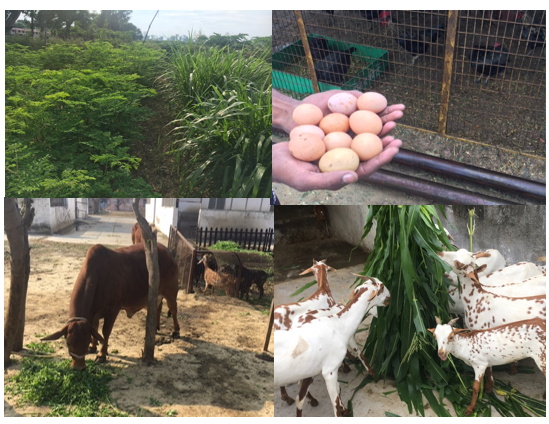
1. Dairy Unit: The dairy unit constitutes a pivotal component of an Integrated Farming System (IFS), contributing significantly to income generation as well as efficient resource recycling. It comprises several interrelated components that collectively ensure milk production, egg and meat production, manure and other byproduct. The primary component of the dairy unit includes milch animals (cows, buffaloes and goat), along with associated categories such as calves, heifers and dry animals. The selection of dairy animals should be based on breed characteristics, milk production potential, adaptability to prevailing agro-climatic conditions, and resistance to diseases. The production of by-products such as dung and urine provides valuable inputs for manure preparation and biogas generation, thereby enhancing nutrient recycling and energy efficiency within the farming system. 2. Crop Production: – Crop production constitutes an essential component of the Integrated Farming System, involving the cultivation of cereals, pulses, and oilseed crops. These crops not only contribute to farm income and food security but also generate crop residues such as straw and stover, which serve as important sources of dry fodder for dairy animals, thereby strengthening the linkage between crop and livestock components.
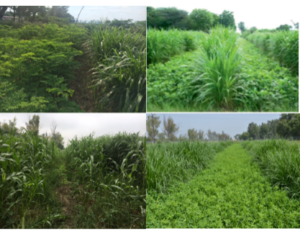
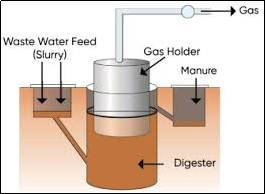
3. Fodder Production: Fodder production is a vital component of the Integrated Farming System, ensuring a continuous and balanced supply of feed for dairy animals. It includes the cultivation of green fodder crops such as maize, sorghum, and napier grass, which provide essential nutrients for milk production. In addition, dry fodder such as straw and hay serves as an important source of roughage, particularly during periods of fodder scarcity, thereby supporting sustained livestock productivity. Suitable fodder crop are sorghum, bajra, cowpea, desmanthus, Rhodes grass, Mayil kondai pul, Elusine sp., Thomson grass, Hybrid Napier etc 4. Biogas Unit: The biogas unit is an important component of the Integrated Farming System, facilitating efficient utilization of animal waste. It utilizes dung to produce biogas, which serves as a renewable source of energy for cooking and other domestic purposes. The by-product, known as biogas slurry, is a nutrient-rich organic fertilizer that can be applied to agricultural fields to improve soil fertility and crop productivity.
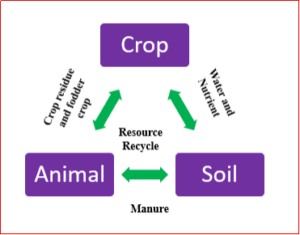
5. Vermicomposting: It is an important component of the Integrated Farming System that involves the biological conversion of dung and other farm wastes into high-quality organic compost through the action of earthworms. The resulting vermicompost is rich in essential nutrients and beneficial microorganisms, which enhance soil fertility, improve soil structure and promote sustainable crop production. 6. Allied Enterprises: In addition to the core components, various subsidiary enterprises such as poultry, pig farming, fish farming, goat & sheep rearing, and mushroom cultivation can be integrated into the farming system. These enterprises diversify farm activities, provide additional sources of income, and enhance employment opportunities for farm families. Their inclusion also contributes to better resource utilization and risk minimization, thereby improving the overall sustainability and profitability of the Integrated Farming System. Nutrient Recycling Flow: It is a fundamental principle of the Integrated Farming System, ensuring efficient utilization of resources and minimization of waste. Crop residues generated from agricultural fields are utilized as feed for livestock. In turn, animal dung is processed through biogas plants or vermicomposting units, resulting in the production of biogas and organic manure. The biogas slurry and vermicompost are subsequently applied to crop fields, enriching soil fertility and enhancing nutrient availability. This cyclic flow of nutrients ultimately leads to improved soil health and increased crop productivity, thereby contributing to the sustainability of the farming system.
· Crop residues → fed to animals · Animal dung → biogas/vermicompost · Biogas slurry → applied to fields · Improves soil fertility → increases crop and fodder yield Advantages of Integrated Farming System · It increases overall food production to meet the rising demands of the growing population. · Farm income is enhanced through diversification and efficient recycling of residues among various farm components. · Soil fertility and long-term productivity are sustained through the incorporation and recycling of organic wastes. · Integration of allied enterprises ensures the availability of nutritionally balanced food rich in proteins, carbohydrates, fats, minerals, and vitamins. · Environmental sustainability is promoted through the effective recycling of wastes generated from livestock and other enterprises such as poultry and piggery. · Production costs are reduced due to internal resource recycling and the utilization of by-products from different farm components. · The system provides a regular and stable income through diversified outputs such as milk, eggs, vegetables, mushrooms, honey, and silkworm cocoons. · Inclusion of components like biogas and agroforestry contributes to meeting farm energy requirements and reducing dependence on conventional energy sources. · Cultivation of fodder crops through intercropping and border cropping ensures the availability of adequate and nutritious feed for livestock. · Agroforestry systems help meet the demand for fuelwood and timber without exerting pressure on natural forests. · Soil erosion is minimized through better land use practices and continuous vegetative cover. · The system generates year-round employment opportunities for farm families, particularly benefiting small and marginal farmers. · Diversification of farm enterprises reduces the risk associated with crop failure due to climatic uncertainties or market fluctuations. If one component underperforms, income from other components helps stabilize the overall farm income. Novel Approaches and Practices in Sustainable Dairy-Based Integrated Farming System Sustainable dairy-based Integrated Farming Systems are increasingly adopting innovative approaches to enhance productivity, profitability and environmental sustainability. These novel practices focus on efficient resource utilization, climate resilience and eco-friendly technologies. 1. Precision Livestock Farming: –The use of advanced technologies such as sensors, wearable devices, and automated systems enables real-time monitoring of animal health, feeding behaviour, milk yield and reproductive status. Precision livestock farming improves decision-making, enhances productivity, and reduces labour requirements. 2. Climate-Resilient Dairy Farming: – Adoption of climate-smart practices such as heat stress management (cooling systems, shade structures), drought-tolerant fodder crops, and water conservation techniques ensures sustained dairy production under changing climatic conditions 3. Integrated Nutrient Management: – Efficient recycling of organic wastes through farmyard manure, vermicomposting, and biogas slurry, combined with judicious use of chemical fertilizers, improves soil fertility and reduces environmental pollution. 4. Use of Hydroponic Feeding Systems: – Hydroponic green fodder production and Azolla cultivation provide nutrient-rich, low-cost feed alternatives, especially during fodder scarcity. These methods require less land and water, making them suitable for small and marginal farmers. 5. Biogas and Bioenergy Integration: – Installation of biogas plants converts animal dung into renewable energy for household use, while the slurry serves as an organic fertilizer. This reduces dependence on fossil fuels and enhances nutrient recycling. 6.Waste-to-Wealth Technologies: – Innovative approaches such as composting, vermicomposting, and urine-based biofertilizers transform farm waste into valuable inputs, promoting circular economy principles within the farming system. 7. Digital and Smart Farming Tools: – Mobile applications, farm management software, and ICT tools assist farmers in record keeping, disease diagnosis, market access, and advisory services, thereby improving farm efficiency and profitability. 8. Integration with Agroforestry: – Linking dairy farming with fish farming and agroforestry enhances resource use efficiency. For example, nutrient-rich slurry can be used in fish ponds, while agroforestry provides fodder, fuelwood and environmental benefits. 9. Genetic Improvement and Reproductive Technologies: – Use of artificial insemination (AI), embryo transfer technology (ETT) and genomic selection improves herd productivity, disease resistance and overall performance of dairy animals. 10. Organic and Low-Input Dairy Farming: – Promotion of organic dairy farming practices reduces the use of synthetic inputs and enhances product quality, environmental sustainability, and market value. Conclusion A dairy-based integrated farming system is a sustainable and resilient approach that enhances farm productivity, profitability and resource utilization efficiency. By effectively recycling farm by-products and integrating crops, livestock and other enterprises, it reduces input costs while improving overall farm income. This system not only ensures year-round employment and livelihood security for farming communities but also contributes to nutritional security through diversified outputs. Furthermore, it promotes environmental sustainability by maintaining soil health, conserving natural resources and supporting ecological balance. Overall, dairy-based integrated farming stands as a viable strategy for achieving long-term agricultural sustainability and improving the socio-economic status of farmers.
|