



SUCESSFUL TREATMENT OF NASAL GRANULOMA IN COW BY HOMEOPATHIC REMEDIES: A CASE STUDY
Karthick Kumar N
Project Manager, Graze Valley, Cattle Valley Limited,
Athikaripatti, Madurai, Tamil Nadu
Mail ID: drkarthickvet@gmail.com
Abstract
Aim: A study was conducted to evaluate the ameliorative potential of homeopathic remedies (Aurum met 200c and Thuja 200c) in crossbreed Holstein Friesian cow affected with nasal granuloma.
Approach: A 4-year-old cross breed HF cow was affected with nasal granuloma with a history of profuse muco-purulent nasal discharge, inspiratory dysponea, snoring sound and cow had shown one large cauliflower-like growth on the lateral surface of one side of the nasal spectum with size about 3.5 cm diameter. The cow was orally administered with homeopathic remedies Aurum met 200c as 40mm size pills @ 10 pills bid for the first 3 days. 4th day onwards cow was treated with Thuja 200c as 40mm size pills @ 10 pills bid for 20 days.
Result: The cow responded to treatment was observed in the first few weeks. In 20th day of the treatment nasal granuloma size was reduced, snoring sound was also reduced and animal was breathing normally. The complete recovery was achieved in 40th day of the treatment. The cow was monitored for five months post treatment period and no recurrence of nasal granuloma was observed.
Conclusion: The current study proves that the homeopathic remedy is effective treatment of nasal granuloma in cow and proved to be safe and cost-effective.
Keywords: Cow, Nasal granuloma, Homeopathic remedies.
Introduction
Nasal granuloma is chronic proliferative disease of anterior nasal passages of cattle. Such lesions have been associated in India with Schistosoma nasale, a species of digenetic trematode in the family Schistosomatidae. Schistosoma nasale inhabits blood vessels of nasal mucosa and causes granuloma and snoring disease in cattle (Liu L., 2010). It was identified first in 1933 by Dr.M.Anant Narayanan Rao at Madras Veterinary College, Tamil Nadu, India. Nasal Schistosomiasis is recognized as the 5th major helminthosis of domestic animals in Indian subcontinent (Sumanth et al., 2004). Nasal Schistosomiasis was found in 19% of the cattle and 44% of the buffaloes from Madurai, Tamil Nadu (Sivaseelan et al., 2004). The fresh water snail Indoplanorbis exustus act as intermediate host (Kluser Liu L., 2010). Affected cattle shows rhinitis, profuse muco-purulent nasal discharge, epistaxis, dysponea and snoring (Wenzel et al., 2012). This blood fluke adversely affects health and production of cattle and serious outbreaks of disease caused by this species have been reported (Latchumikanthan et al., 2014). Various therapeutic approaches are available for treating Nasal granuloma such as Anthiomaline (Vaidyanathan., 1949), Triclabendazole (Agrwal., 2012) and Praziquantal (Asoke et al.,2018). In recent years, interest in complementary and alternative therapies for the management of disease has increased. Homeopathy is emerging as an alternative therapy in Veterinary medicine (Day.1992). Homeopathic drugs recently used in treating conditions such as warts (Madrewar., 1999), bovine papillomatosis (Shakoor et al., 2012), bovine mastitis (Aubry et al.,2013) etc in cows. With this background, the present study was aimed at successful treatment of nasal granuloma in the cow by using homeopathic remedies.
Materials and Method
Animal: A 4-year-old crossbreed Holstein Friesian cow was presented at the Veterinary Dispensary, Kottakudi, Melur (tk), Madurai(dist.), Tamil Nadu with a case history of profuse muco-purulent nasal discharge, Inspiratory dyspnoea and snoring sound. Further cow had a history of grazing near water pond areas.
Clinical examination: The cow was bright, alert and active. Feed and water intake was partially in cow. Rectal temperature and heart rates were within the normal range. Conjunctival and vulval mucous membranes were pale pink. Audible respiratory noises were noticed in cow even at a considerable distance. The observation of the cow had shown one large cauliflower-like nasal granuloma on the lateral surface of one side of the nasal spectum with size about 3.5 cm diameters.
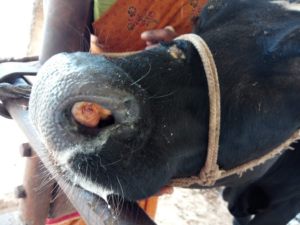
Fig.1: Nasal granuloma of the affected cow on the day treatment.
Study design: In field level no definite equipment for diagnosis such as sedimentation techniques, histopathological findings and radiographical findings. Its diagnosis can be challenging (Newton and Ah-see., 2008). So, treatment of nasal granuloma based on history and clinical symptoms were taken. The cow was orally administered with homeopathic remedies Aurum met 200c as 40mm size pills @ 10 pills bid for the first 3 days. 4th day onwards cow was treated with Thuja 200c as 40mm size pills bid for 20 days. Cow was examined 10 days once for signs of recovery. No other therapy was given during the treatment.
Dilution preparation: One drop of mother tincture is diluted with Ninety-nine drops of alcohol to give a potency of 1C (One in hundred). When one drop of potency 1C is diluted again with Ninety-nine parts of alcohol it gives 2C potency (One in ten thousand). With such serial dilution, potency 12C, 30C, 200C, 1M, etc. can be prepared. At each stage, the dilution is thoroughly shaken. (Madrewar., 1999).
Thuja occidentalis: This remedy is real importance in the treatment of skin conditions accompanied by the development of warty growths. It is indicated in polyps, tubercles, epithelioma, carbuncles, ulcer (Madrewar., 1999).
Aurum metallicum: It acts on inflammatory swelling and redness of nose followed by desquamation. (John henry clarke., 1902).
Result and Discussion
The cow responded to treatment was observed in the first few weeks. In the 20th day of the treatment nasal granuloma size was reduced to 1.5cm diameter, snoring sound was also diminished to slight sound that was audible and the animal was breathing normally. The complete recovery was achieved in 40th day of the treatment.
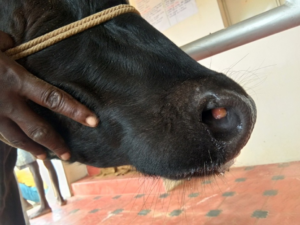
Fig.2: 20th day of the treatment nasal granuloma size was reduced to 1.5cm diameter.
Nasal granuloma is typically benign growth that originates from mucosa and may expand to anterior nasal passage (Duarte et al., 2015). Such lesions are due to proliferation of nasal epithelium, usually in response to chronic inflammatory process (Wilson and Dungworth., 2002). Chronic proliferation of nasal epithelium leads to growth formation or granuloma in nasal cavity associated with snoring sound and muco-purulent discharges (Wilson and Dungworth, 2002). Similarly in the present study, observed characteristic clinical signs were profuse muco-purulent discharge, inspiratory dyspnoea and snoring sound.
In the present study, the four-year cow is affected, this statement was contraindicated to the previous statement by (Sumath et al., 2004) because of the high incidence of nasal granuloma was seen in older animals. In the present study, macroscopically nasal granuloma is a cauliflower-like shaped, whereas pedunculated and cylindrical shaped in Gir cow which is a disagreement finding of the earlier reports (Vineet kumar et al., 2016). In present study, nasal granuloma found in the lateral surface of the one side of the nasal spectum and sizes about
3.5 cm diameters were observed. Whereas (Arun et al., 2015) was reported nasal granuloma found on the dorsal surface of each nasal cavity with 0.5 cm size.
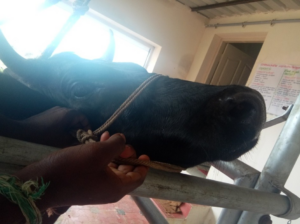
Fig.3: complete recovery of nasal granuloma was achieved in 40th day of the treatment.
(Vaidyanthan S.N., 1949) and (Rahman SA et al., 1988) reported Anthiomaline and Praziquantel is drug of choice for the treatment of nasal granuloma respectively. However, there is a recurrence of the clinical signs observed in after a few months, of the treatment reported by (Ashok et al., 2018). Whereas in the present study the cow was monitored up to five months for recurrence of clinical signs but no clinical symptoms were observed.
A homeopathic remedy (Aurum met 200c and Thuja 200c) was found to be very effective in the treatment of nasal granuloma in cow; as a result, complete regression of nasal granuloma observed on 40th day after initiation of treatment, further no adverse effect was observed during the course and after the treatment. It proves that these homeopathic remedies could be used as a potential non-invasive method for the successful treatment of nasal granuloma which would be alternate to surgical removal.
Control: This parasite, is responsible for causing major economic losses in livestock which can be minimized by administering several control strategies such as snail control, avoidance of placing animals to graze near snail infected pastures, periodical deworming with approved trematocidals, supply water free from any larval stages of Schistosoma nasale and treatment at as early stage of infection.
Acknowledgement
With deep gratitude, I express my indebtedness and sincere thanks to Dr. Sivaraman, Ph.D. Associate Professor and Head at the Veterinary Clinical Complex, Salem and. Dr.Umakanthan for his valuable guidance.
References
[1] Asoke K. Basu and Debaraj Bhattacharyya (2018) (Trematoda: Schistosomatidae) causative agent of nasal schistosomiasis of animals in the Indian subcontinent- an overview, research cate CAB Reviews 13, no.053
- Agrawal M.C (2012) Schistosomes and Schistosomiasis in South Asia. Springer (India) Pvt Ltd, New Delhi.
- , Issautier, M.N., Champomier,D and Terzan, L., (2013) Early udder inflammation in dairy cows treated by a homeopathic medicine(dolisovet): A prospective observational pilot study. Homeopathy, 102(2):139-144.
- Arun K.Sangwa, Sukhdeep Vohra and Vikas Jagla, (2015); First report of nasal schistosomiasis in a cross-breed cow in Haryana, Haryana vet.54 (2); 202-203.
- Day,E.I, (1992). Alternative Medicine, In Bovine Medicine, First Edn. p. 889-96.
- Duarte RP, Rocha PRD,Schweigert A, Morelli FCG, Machado GF, (2015) Nasal polyposis in a cow. Brazilia Journal of Veterinary Pathology; 8:102-106.
- JohHenry Clarke,M.D(1902) A Dictionary of practical material
- Kluser,L.L,(2010). The phylogeography of Indoplanorbis exustus (Gastropoda: plaorbidae) in Asia.Parasites vectors, 3: 57-58.
- LatchumikanthanA, Pothiappan P, Ilayabharathi D, Das SS, Kumar D, Ilangovan C (2014) Occurrence of Schistosoma nasale infection in bullocks of Puducherry. Parasit.Dis; 38(2); 238-240
- LiuL (2010). The phylogeography of Indoplanorbis exustus (Gastropoda: plaorbidae) in Asia.Parasites vectors, 3: 57-58.
- MadrewarP., (1999) Therapeutics of veterinary homeopathy and repertory. Published by kuldeepjain for B.Jain publishers (P) ltd.2nd edition page.290, 238.
- Newto,J.Rand Ah-See,K.W(2008) A review of nasal Therap Clin R Manag
4:507-1
- Rahman SA,Sano M, Jagnnath MS, Prabhakar KS,D’souza PE, Prem G (1988) Efficacy ofPraziquatel against Schistosoma nasale infection in Trop Aim Health Prod; 20(1):19-22.
- Siva seelan S,Kathiresan D,Anna T (2004) Persistent Nasal Schistosomiasis in a village. Indian Veterinary Journal; 81(4): 454-5.
- Sumanth S,D’souza PE, Jagannath MS (2004). A Study of nasal and visceral Schistosomosis in cattle slaughtered at an abattoir in Bangalore, South India Sci.Tech.OIE; 23(3):937-942.
- Shakoor,A., Muhammad, S.A., Kashif, M., Rehman, Z.U., Hussian, A and Hameed,M.R(2012) Effects of Thuja occidentalis as an alternative remedy in the treatment of Papillomatosis in cattle. World 5(2): 118-120.
- Wilson DW, Dungworth DL. (2002) Tumors of the respiratory tract.In:Meuten DJ, editor. Tumors of domestic animals. 4th State press, low, Ames, p.376-77.
- Sumanth S,D’souza PE, Jagannath MS (2004). A Study of nasal and visceral Schistosomosis in cattle slaughtered at an abattoir in Bangalore, South India Sci.Tech.OIE; 23(3):937-942.
- Wenzel,A.M.,, Wack, A.N., Beck,S.E and Broson, E.(2012) Pathology in practice.Am.Vet.Med Assoc 241:885-87.
- Vaidyanathan,S.N.(1949).Schistosoma spindalis in a Treatment with Anthiomalie Indian Veterinary Journal.26:225-228.
- Vineet Kumat,J.V.Vadalia and A.R.Bhadaiya (2016). Diagnosis and management of nasal granuloma in Gir cattle. Intas Polivet 17 (11):519-521.
- Vaidyanathan,S.N.(1949).Schistosoma spindalis in a Treatment with Anthiomalie Indian Veterinary Journal.26:225-228.
- Siva seelan S,Kathiresan D,Anna T (2004) Persistent Nasal Schistosomiasis in a village. Indian Veterinary Journal; 81(4): 454-5.















