

Importance of Non-Bovine Milk: The Medicinal Value of Mare’s Milk
By Major Dr. Sudesh Kanungo
In the evolving landscape of functional foods and nutraceuticals, non-bovine milk has emerged as an important area of scientific interest. While cow and buffalo milk dominate the dairy sector globally and particularly in India, increasing attention is being directed towards alternative milk sources such as goat, camel, donkey, and mare (horse) milk due to their unique nutritional and therapeutic properties.
Among these, mare’s milk has attracted considerable scientific attention because of its remarkable similarity to human breast milk and its potential role in promoting human health. For centuries, communities in Central Asia and Mongolia have consumed mare’s milk and its fermented products for their perceived medicinal benefits. Modern research is now validating many of these traditional beliefs.
Mare’s Milk: Nature’s Closest Alternative to Human Milk
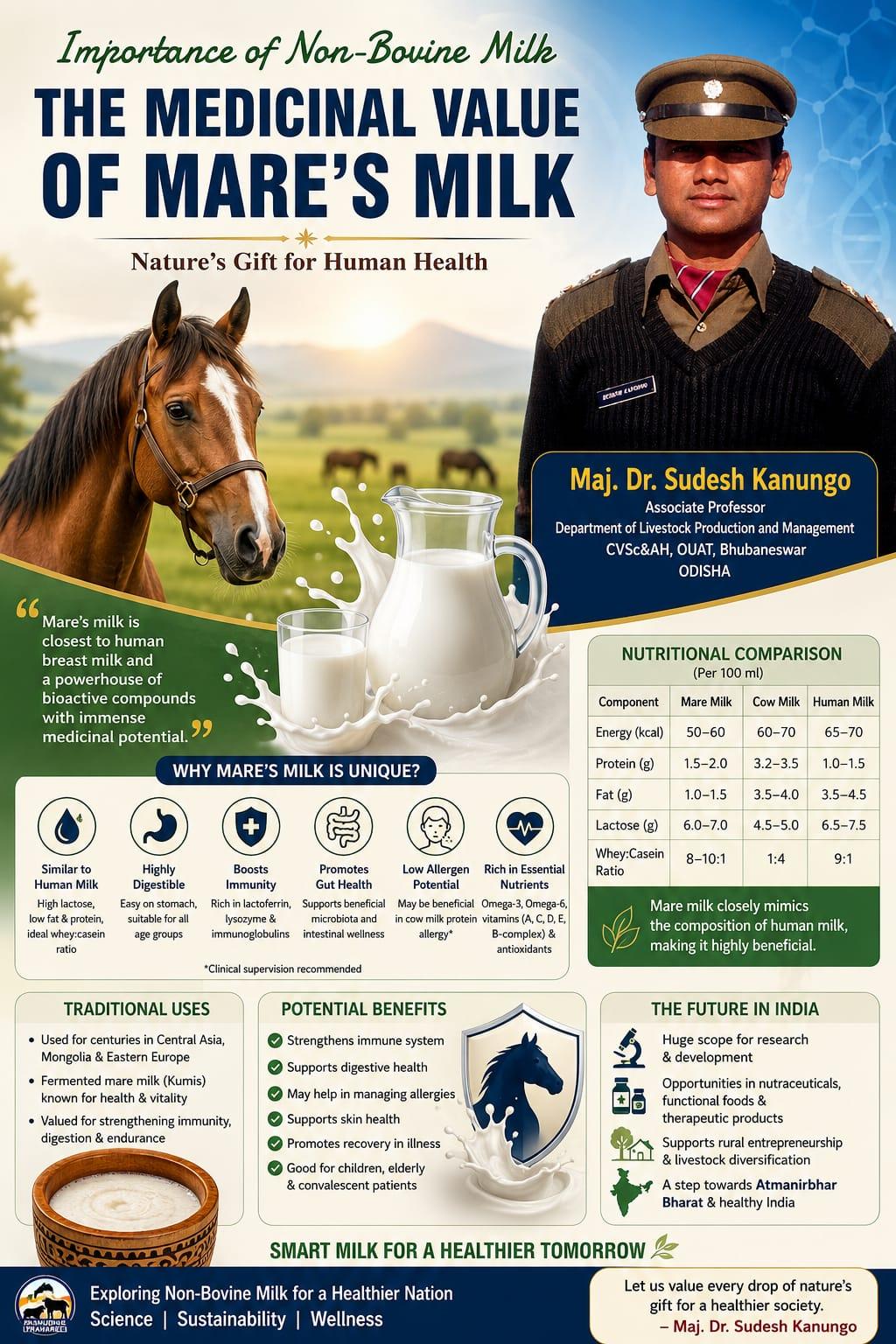
The composition of mare’s milk differs significantly from bovine milk. It contains lower fat and protein levels but a higher concentration of lactose, making it more digestible and palatable. More importantly, the whey-to-casein ratio in mare’s milk closely resembles that of human milk, which contributes to its superior digestibility and lower allergenic potential.
Scientific studies have shown that mare’s milk contains:
High-quality whey proteins
Essential amino acids
Omega-3 and Omega-6 fatty acids
Vitamins A, C, D, E and B-complex
Bioactive compounds such as lactoferrin, lysozyme and immunoglobulins
Antioxidant and antimicrobial factors
These components make mare’s milk not merely a food but a functional health-promoting product.
Medicinal and Therapeutic Significance
1. Excellent Digestibility
Many individuals experience digestive discomfort after consuming cow milk due to protein sensitivity or intolerance. Mare’s milk contains a softer protein structure and lower casein content, making it easier to digest. This characteristic has made it a promising alternative for people who cannot comfortably consume bovine milk.
2. Support for Immune Function
Mare’s milk contains natural immune-enhancing compounds such as lactoferrin, lysozyme, and immunoglobulins. These bioactive substances possess antibacterial and antiviral properties and may contribute to strengthening the body’s natural defense mechanisms.
3. Gut Health and Microbiome Balance
Emerging research suggests that mare’s milk may positively influence intestinal health. Its bioactive peptides and lactose content support beneficial gut microflora, thereby promoting digestive wellness and nutrient absorption. Fermented mare’s milk products such as kumis have traditionally been used for maintaining gastrointestinal health.
4. Potential Role in Allergic Conditions
Studies indicate that mare’s milk may serve as a suitable substitute for certain individuals suffering from cow milk protein allergy. Because its protein profile differs significantly from bovine milk, it may reduce the risk of allergic reactions in susceptible individuals. However, clinical supervision remains essential.
5. Rich Source of Essential Fatty Acids
Mare’s milk contains significant amounts of polyunsaturated fatty acids, including linoleic and alpha-linolenic acids. These nutrients are essential for cardiovascular health, neurological development, and cellular function.
Non-Bovine Milk in the Indian Context
India is the world’s largest milk producer, yet its dairy industry is overwhelmingly dependent on cattle and buffaloes. With rising awareness about nutrition, food allergies, functional foods, and personalized nutrition, alternative milk species deserve greater attention.
The country’s diverse agro-climatic conditions support several equine populations, including indigenous horse breeds such as Marwari, Kathiawari, Manipuri, Zanskari, and Spiti horses. Although mare milk production is currently negligible, niche markets for medicinal, therapeutic, and premium health products may emerge in the future.
Furthermore, India’s growing nutraceutical and wellness sectors provide opportunities for scientific exploration of non-bovine milk products. Research institutions, veterinary universities, and dairy scientists should investigate the feasibility, economics, and health benefits of mare milk production under Indian conditions.
Challenges and Limitations
Despite its promising health attributes, mare’s milk faces several practical challenges:
Low milk yield compared to dairy cattle and buffaloes.
Specialized management and milking practices.
Limited consumer awareness.
Lack of organized processing and marketing infrastructure.
Need for comprehensive clinical trials in Indian populations.
Addressing these challenges will require coordinated efforts from veterinarians, dairy scientists, policymakers, and entrepreneurs.
The Way Forward
The future of nutrition lies not only in increasing food production but also in enhancing food functionality. Mare’s milk represents a unique example of how traditional animal products can contribute to modern health solutions.
As scientific evidence continues to accumulate, mare’s milk may find a place among premium functional foods, particularly for individuals seeking highly digestible, nutrient-rich, and biologically active dairy alternatives.
For India, the exploration of non-bovine milk species offers an exciting frontier in dairy diversification, rural entrepreneurship, and health-oriented food innovation.
Conclusion
Mare’s milk is far more than a traditional beverage. Its unique nutritional profile, digestibility, immune-supporting components, and potential therapeutic benefits position it as one of the most promising non-bovine milk sources in the world. While large-scale commercialization may still be distant, scientific research strongly supports its value as a functional food with significant medicinal potential.
The time has come for India to broaden its perspective beyond conventional dairy systems and explore the untapped opportunities offered by non-bovine milk species. Such diversification could contribute not only to human health but also to sustainable livestock development and rural prosperity.
“The future of dairy nutrition may not lie in producing more milk, but in producing smarter milk.”
Maj.Dr. Sudesh Kanungo, Associate Professor, Department of Livestock Production and Management, CVSc&AH ,OUAT, Bhubaneswar ,ODISHA