

Low-Carbon Dairy Production: Pathways Towards a Net-Zero Livestock Sector – A Review
Dr. Deeksha Singh
Ph.D. Scholar, Department of Veterinary Medicine, College of Veterinary and Animal Sciences, G.B.P.U.A.T., Pantnagar, Uttarakhand, India
*Corresponding author email: deekshas9410@gmail.com
Abstract
The dairy sector occupies a paradoxical position within global food systems: it remains nutritionally indispensable for billions of people while contributing approximately 3.4% of total anthropogenic greenhouse gas emissions, primarily through enteric fermentation, manure decomposition and feed production. As climate commitments under the Paris Agreement intensify, reducing the emission intensity of milk production has become both a scientific priority and an agricultural policy imperative. This review synthesizes current understanding of dairy-related greenhouse gas sources and evaluates the principal mitigation strategies available across nutritional, genetic and feed management domains. Particular attention is given to the mechanistic basis of enteric methane production, the efficacy of emerging feed additives including 3-nitrooxypropanol and the structural constraints that limit technology transfer to smallholder-dominant systems such as India. The analysis reveals that no single intervention achieves adequate mitigation in isolation; rather, context-calibrated portfolios combining dietary manipulation, precision feeding and forage quality improvement offer the most credible pathway toward measurable emission reductions without compromising milk yield or animal welfare.
Keywords: Enteric methane, dairy carbon footprint, greenhouse gas mitigation, feed additives, precision livestock farming, climate-smart agriculture
- Introduction
Global demand for milk and dairy products is projected to increase substantially through 2050, driven by population growth and rising incomes across South Asia and sub-Saharan Africa, yet the environmental costs of meeting this demand are increasingly difficult to reconcile with planetary boundary constraints (Pope et al., 2021). Livestock systems collectively contribute 14.5% of anthropogenic greenhouse gas emissions, with dairy cattle implicated in roughly one-fifth of that figure through a combination of enteric methane, nitrous oxide from manure and carbon dioxide associated with feed crop production and land use change (FAO, 2023). The challenge this creates is not merely technical but structural: the same smallholder dairy systems that face the greatest productivity deficits also carry the highest emission intensities per unit of milk, meaning that aggregate global emissions could rise even as per-animal efficiency improves in intensive sectors.
India illustrates this tension acutely. As the world’s largest milk producer, India’s dairy sector operates predominantly through smallholder and landless farmers maintaining indigenous zebu cattle and riverine buffalo whose per-animal productivity remains well below that of temperate-breed counterparts. High roughage dependency, seasonal fodder scarcity and limited access to precision nutritional management collectively sustain elevated methane yields per unit of digestible intake, inflating emission intensities that national-level inventories struggle to accurately capture. These system-specific constraints demand mitigation frameworks developed with contextual fidelity rather than straightforward adoption of protocols validated under intensive European or North American conditions.
- Carbon Footprint of the Dairy Industry
Estimating the carbon footprint of dairy production is methodologically contested. Life cycle assessments vary considerably in their system boundary definitions, functional unit choices and allocation procedures between milk and co-products, generating a spread in published emission intensities from below 1.0 kg CO₂-equivalent per kilogram of fat-and-protein-corrected milk in high-performing intensive systems to over 7.0 kg CO₂-eq in low-productivity smallholder contexts (Stolarski et al., 2025). Enteric fermentation consistently contributes between 50 and 65% of farm-gate emissions across production typologies, with manure management responsible for a further 15 to 25% and the remainder distributed across feed cultivation, processing and on-farm energy use (Evangelista et al., 2024).
The policy discourse around dairy decarbonization has increasingly centred on emission intensity rather than absolute volume, reflecting the argument that productivity improvements can deliver per-unit reductions even without novel mitigation inputs. This framing is not without risk: where demand growth outpaces efficiency gains, intensity improvements offer limited climate benefit in absolute terms. Feeding systems, reproductive performance and herd turnover rates interact in ways that complicate straightforward emission accounting and the tendency to treat per-unit intensity as a proxy for sustainability obscures the land use, water and biodiversity dimensions that a genuinely comprehensive carbon footprint must incorporate.
- Sources of Greenhouse Gas Emissions in Dairy Farming
Enteric methane arises as a metabolic by-product of anaerobic microbial fermentation in the rumen, where methanogenic archaea reduce carbon dioxide using hydrogen generated during carbohydrate fermentation. This process dissipates between 2 and 12% of gross energy intake as methane, the exact proportion determined primarily by diet composition, feed intake level and the structure of the rumen microbial community (Malyugina et al., 2025). High-forage diets rich in structural carbohydrates favour acetate-dominated fermentation, generating surplus hydrogen and consequently elevated methane yields; diets incorporating rapidly fermentable starch or supplemental lipids shift fermentation stoichiometry toward propionate, reducing methanogenic substrate availability. Substantial inter-animal variation in methane output, frequently exceeding 20% within diet-treatment groups, confirms that host genetics and rumen microbiome composition exert effects independent of dietary management, a finding with direct implications for breeding programme design (De Bhowmick and Hayes, 2023).
Manure management introduces a separate but mechanistically distinct emission stream. Methane from stored slurry is generated by anaerobic microbial decomposition of volatile solids under the conditions of liquid storage systems, while nitrous oxide arises through coupled nitrification and denitrification in aerobic and semi-aerobic manure deposits. System configuration profoundly alters the ratio of these two gases: liquid slurry storage generates disproportionately high methane compared to solid manure handling, where the emission profile shifts toward nitrous oxide. In South Asian contexts, the traditional use of dried dung as household fuel modifies this dynamic, substituting wood combustion emissions with a comparatively lower-carbon alternative while simultaneously diverting organic matter from anaerobic decomposition pathways (Bharadwaj et al., 2025).
Feed production upstream of the farm gate contributes through synthetic nitrogen fertilizer manufacture, field-applied nitrous oxide and the land use change burden associated with imported protein ingredients, particularly soy. The carbon cost of soy-derived protein varies across two orders of magnitude depending on geographic origin and production system, rendering supply chain provenance a material variable in any credible dairy life cycle assessment.
- Methane Mitigation Strategies in Dairy Animals
Dietary lipid supplementation remains among the most practically deployed nutritional strategies for methane reduction, operating through partial substitution of fermentable carbohydrate, direct inhibitory effects of long-chain fatty acids on methanogens and hydrogen consumption via biohydrogenation of unsaturated fatty acids. Meta-analyses report consistent methane yield reductions of 2 to 5% per percentage unit of supplemental fat, though efficacy plateaus at around 6 to 7% dietary fat inclusion, beyond which rumen fiber digestion and milk fat synthesis are adversely affected (Patra 2013). Tannin-containing forages present a complementary approach with particular relevance to tropical and subtropical systems, where species such as Leucaena leucocephala and various browse legumes demonstrate methane reductions of 10 to 20% through combined inhibition of methanogens and reduced proteolysis of rumen-degradable protein (Piñeiro-Vázquez et al., 2018).
Among purpose-developed feed additives, 3-nitrooxypropanol has achieved the most robust validation, with multi-country randomized controlled trials demonstrating consistent methane yield reductions of 26 to 30% through specific inhibition of methyl-coenzyme M reductase, the terminal enzyme of methanogenesis (Van De Gucht et al., 2025). Regulatory approval across the European Union, Australia and Brazil represents a meaningful commercialization milestone, though cost and supply chain constraints limit accessibility in smallholder-dominated systems. Nitrate supplementation, which exploits the preferential reduction of nitrate over carbon dioxide as a hydrogen sink in the rumen, has shown reductions of 15 to 30% with encapsulated calcium nitrate formulations, though careful dose management remains necessary to prevent acute nitrite toxicity (Granja Salcedo et al., 2019).
Genetic selection for reduced methane yield exploits heritable variation in residual methane production, with heritability estimates in Holstein-Friesian cattle typically ranging from 0.10 to 0.30 (Manzanilla-Pech et al., 2021). The scalability barrier for direct phenotyping is increasingly addressed through mid-infrared spectroscopy of routine milk recording samples, which enables retrospective population-scale methane prediction and genomic reference population construction without dedicated respiration infrastructure.
- Sustainable Feed and Fodder Management
Feed quality exerts a dual influence on dairy sustainability, simultaneously determining productive efficiency and the methane yield of the rumen fermentation substrate. Across much of the Indian subcontinent, cereal straws remain the dominant roughage source for dairy animals, yet their nutritive value is fundamentally limiting. Crude protein concentrations rarely exceed 4% and organic matter digestibility frequently falls below 50%, a combination that not only restricts milk output but also sustains disproportionately high methane production relative to the digestible energy actually available to the animal (Tseten et al., 2022). Urea and ammoniation treatments can improve digestibility by 15 to 25 percentage units and the downstream effect on methane intensity per kilogram of milk produced is meaningful. The problem is adoption: input costs, practical complexity and the persistent weakness of agricultural extension services in reaching marginal and smallholder farmers have kept these technologies largely confined to research stations and demonstration plots.
Replacing imported soy-based protein with locally available alternatives such as pulse crop residues and oilseed cakes reduces both the upstream carbon burden and dependence on volatile international supply chains. Single-cell proteins from hydrogen-oxidizing bacteria are a more recent addition to this conversation, though commercial-scale availability remains limited. Where precision nutrient matching is feasible, adjusting rations to individual animal requirements rather than herd averages consistently reduces urinary nitrogen excretion, with corresponding reductions in nitrous oxide emission potential of 10 to 20% (Pander et al., 2020). Feed conversion efficiency tends to improve alongside. The barrier, as with most precision tools, is infrastructure: near-infrared spectroscopy platforms and the decision-support systems they feed into are not readily accessible to the smallholder farmers who manage the majority of India’s dairy animals. Extending these tools to smallholder contexts requires deliberate investment in mobile analytical platforms and locally adapted advisory systems that current extension infrastructures in South Asia and sub-Saharan Africa are not yet configured to deliver at scale.
- Manure Management and Circular Dairy Economy
Manure represents one of the more tractable emission sources in dairy systems, partly because the mitigation technologies are mature and partly because they generate recoverable value. Anaerobic digestion captures methane that would otherwise escape from open storage, converting it into biogas for on-farm energy use while producing digestate with demonstrably superior nitrogen availability compared to raw slurry. The climate benefit is therefore compound: avoided methane emission plus displacement of fossil fuel consumption. In India, biogas infrastructure has expanded substantially under national programmes, yet utilization among smallholders remains uneven, constrained by upfront capital requirements and the technical demands of plant maintenance. Where adoption has occurred at scale, as in parts of Punjab and Gujarat, the co-benefits extend well beyond emission reduction to include reduced fuelwood dependence and improved soil fertility through digestate application (Pandove et al., 2025).
The circular economy framing of manure management has gained considerable traction in recent literature, repositioning waste streams as nutrient and energy resources within integrated farming systems. Composting, vermicomposting and struvite precipitation for phosphorus recovery each address different fractions of manure’s emission and resource potential, though none fully substitutes for anaerobic digestion in terms of methane abatement. Solid-liquid separation prior to storage modifies the anaerobic conditions that drive methane production and the separated solid fraction can be composted or used as bedding material, further reducing volatile solids available for methanogenesis. These interventions are increasingly being integrated into whole-farm emission accounting frameworks, which is necessary if manure management is to be meaningfully credited within carbon markets or compliance schemes.
- Precision Dairy Farming for Emission Reduction
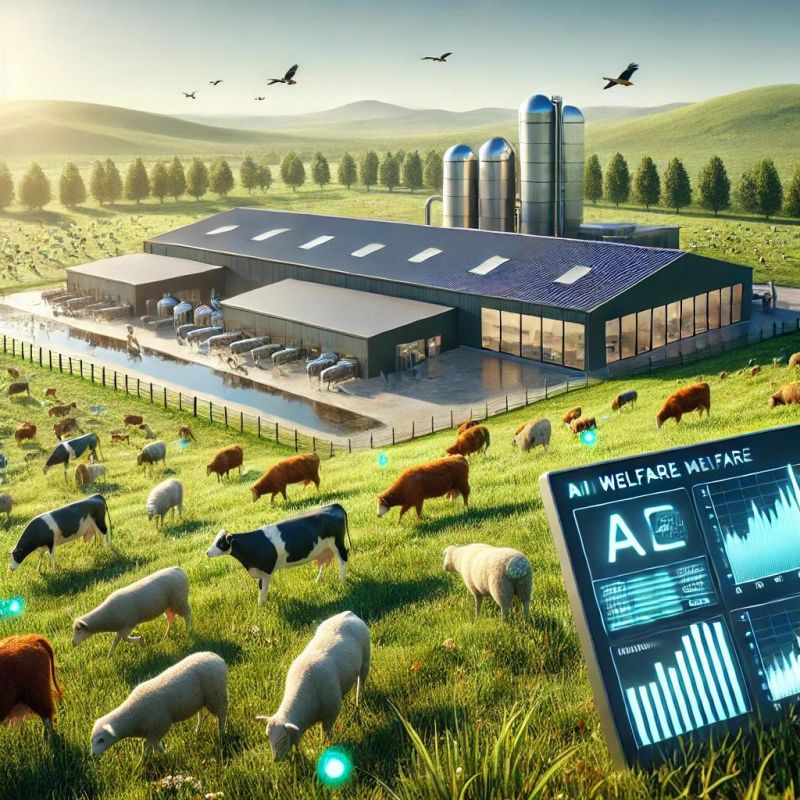
Precision livestock farming encompasses a range of sensor-based, data-driven technologies that collectively improve the resolution at which farm managers can observe and respond to individual animal physiology, behaviour and productivity. From an emission standpoint, the relevance lies primarily in the capacity to reduce nutritional oversupply, improve reproductive efficiency and detect subclinical health conditions before they translate into reduced feed conversion and elevated emission intensity. Automated milking systems, activity monitors and real-time milk composition sensors generate continuous data streams that, when integrated with decision-support platforms, allow ration adjustments calibrated to actual rather than assumed nutrient requirements.
The emission implications of improved reproductive performance are often underappreciated. Every additional non-productive day in a dairy cow’s life cycle contributes to the maintenance energy burden without generating milk output, effectively inflating the emission denominator per unit of product. Precision oestrus detection technologies reduce inter-calving intervals, compress the replacement heifer period and lower involuntary culling rates, each of which contributes to a leaner herd structure with a smaller total emission footprint per unit of milk. The challenge in deploying these technologies across fragmented smallholder systems is not primarily technological but economic and infrastructural. Sensor costs, connectivity requirements and the analytical capacity needed to translate data into management decisions remain significant barriers in low-income dairy regions and the risk of technological exclusion along development gradients deserves more attention than it typically receives in the precision farming literature.
- Role of Indigenous Breeds in Climate-Resilient Dairy Farming
The emission profile of indigenous cattle breeds such as Gir, Sahiwal and Tharparkar and of riverine buffalo breeds including Murrah and Surti, has attracted renewed scientific interest as the limitations of productivity-focused crossbreeding programmes become more apparent. Per-animal methane outputs from indigenous zebu cattle are lower in absolute terms than from high-yielding Holstein-Friesian crosses, though the relevant metric for emission accounting is yield per unit of milk rather than per animal (Biswas et al., 2026). On this basis, the lower productivity of indigenous breeds conventionally inflates their emission intensity. However, this framing omits feed source quality, health resilience and longevity, all of which affect lifetime emission efficiency in ways that simple per-lactation comparisons obscure.
Indigenous breeds demonstrate markedly superior adaptation to heat stress, rough grazing conditions and the nutritionally marginal diets prevalent in rain-fed and semi-arid farming systems. Under these conditions, exotic or crossbred animals frequently underperform relative to their genetic potential, narrowing or eliminating the productivity advantage that justifies their higher emission intensity. There is growing argument that selective improvement of indigenous breeds for production traits, rather than continued emphasis on Holstein introgression, may offer a more climatically durable path for India’s smallholder dairy sector, though the timeline for achieving meaningful genetic progress through within-breed selection is considerably longer than policy cycles tend to accommodate.
- Renewable Energy Integration in Dairy Farms
On-farm energy consumption, though a smaller fraction of total dairy emissions than enteric fermentation or feed production, is among the more straightforward components to decarbonize. Milking systems, refrigeration, ventilation and feed processing collectively account for the bulk of direct electricity demand and solar photovoltaic installations have demonstrated economic viability across a range of farm scales in both temperate and tropical contexts. The combination of solar power with biogas-based combined heat and power systems creates complementary generation profiles that can substantially reduce grid electricity dependence on dairy farms operating in regions with reliable solar irradiance.
In India, several state-level dairy cooperatives have piloted solar-powered chilling centres and processing units, with reported reductions in grid electricity consumption of 40 to 60%. Scaling these initiatives requires financing mechanisms that accommodate the capital constraints of cooperative structures and individual farmers and the integration of renewable energy targets into dairy sector sustainability commitments remains inconsistent across state policies. At the global level, the decarbonization of electricity grids independently reduces the emission burden of on-farm energy use without requiring farm-level intervention, though the pace of grid transition varies enormously across production regions.
- Policies and Global Initiatives Towards Net-Zero Dairy Sector
The voluntary commitments of major dairy companies and national governments to net-zero or carbon-neutral targets by mid-century have proliferated since 2020, yet the scientific credibility of these commitments varies considerably. Many rely heavily on carbon offset mechanisms rather than direct emission reductions and the permanence and additionality of agricultural carbon sequestration credits remain contested. The Global Methane Pledge, endorsed by over 150 countries, targets a 30% reduction in methane emissions from 2020 levels by 2030, with livestock identified as a priority sector. Translating this commitment into verifiable on-farm reductions requires standardized measurement and reporting frameworks that most national agricultural monitoring systems are not currently equipped to provide.
Regulatory instruments such as the EU’s Farm to Fork Strategy and New Zealand’s agricultural emissions pricing mechanism represent more structurally binding approaches, though each has encountered resistance from farming communities concerned about competitiveness and income impacts. The tension between environmental stringency and farm viability is real and cannot be resolved purely through efficiency arguments; transition support, technology access and fair market pricing for sustainably produced milk are complementary requirements that policy frameworks have addressed unevenly.
- Challenges in Achieving Low-Carbon Dairy Production
The path to net-zero dairy is genuinely difficult, not because solutions are absent but because the conditions for their deployment are inconsistently met. Mitigation technologies validated under controlled trial conditions frequently underperform in commercial settings due to diet variability, animal management differences and the absence of monitoring infrastructure. Feed additives such as 3-nitrooxypropanol show robust efficacy in high-input systems but their cost-effectiveness in low-margin smallholder operations remains unestablished. Genetic improvement timelines extend beyond the planning horizons of most climate policy instruments. And the measurement, reporting, and verification infrastructure needed to underpin carbon markets or compliance schemes for on-farm methane is expensive, technically complex and currently absent in the regions where emission growth is most likely to occur (Pupo et al., 2025).
- Future Perspectives and Emerging Technologies
Rumen microbiome engineering through targeted bacteriophage therapies, archaeal vaccines and methanogen-selective probiotics represents a scientifically plausible but still largely pre-commercial frontier. Methane vaccines, which would stimulate host immune responses against rumen methanogens, have been in intermittent development for over two decades and remain elusive in terms of field-ready formulations (Baca-González et al., 2020). Genomic tools for accelerating indigenous breed improvement, combined with the expanding availability of low-cost milk mid-infrared phenotyping, may compress genetic selection timelines in ways that were impractical a decade ago. At the systems level, integrating remote sensing, livestock tracking and satellite-based land use monitoring into national GHG inventories could substantially improve the accuracy of emission accounting for extensive and smallholder dairy systems, providing a more credible evidential basis for policy design and carbon market participation (Džermeikaitė et al., 2025).
- Conclusion
Decarbonizing dairy production is neither a singular technological problem nor a challenge that efficiency improvements alone will resolve. The diversity of production systems, breed types, feed environments and institutional contexts across global dairy sectors demands a mitigation approach that is calibrated rather than generic. What the accumulated evidence supports is a portfolio logic: combining dietary interventions, genetic improvement, manure valorization and precision management tools in combinations appropriate to specific production contexts, with renewable energy integration and policy alignment providing the enabling environment. For India and comparable smallholder-dominant systems, the priority is developing and validating these combinations under local conditions rather than adapting frameworks designed for intensive Western dairying. The scientific foundation is increasingly solid; the implementation gap remains the defining challenge.
References
Baca-González, V., Asensio-Calavia, P., González-Acosta, S., Pérez de la Lastra, J. M. and Morales de la Nuez, A. (2020). Are Vaccines the Solution for Methane Emissions from Ruminants? A Systematic Review. Vaccines (Basel), 8(3): 460. doi: 10.3390/vaccines8030460.
Bharadwaj, B., Dhungana, P. and Ashworth, P. 2025. Burning dung cake as a household fuel: A review. Next Energy, 9: 100410. https://doi.org/10.1016/j.nxener.2025.100410.
Biswas, Probhakar & Roy, Manoranjan & Pakhira, Manik & Saha, Debasish & Roy, Amitava & Biswas, Suman. (2026). Indigenous Indian Cattle and Buffalo Breeds as a Resource for Sustainable Hide Production.
De Bhowmick, G. and Hayes, M. (2023). Potential of Seaweeds to Mitigate Production of Greenhouse Gases during Production of Ruminant Proteins. Global Challenges, 7(5): 2200145. doi: 10.1002/gch2.202200145.
Džermeikaitė, K., Šidlauskaitė, M., Antanaitis, R. and Anskienė, L. (2025). Enhancing Genomic Selection in Dairy Cattle Through Artificial Intelligence: Integrating Advanced Phenotyping and Predictive Models to Advance Health, Climate Resilience, and Sustainability. Dairy, 6: 50. 10.3390/dairy6050050.
Evangelista, C., Milanesi, M., Pietrucci, D., Chillemi, G. and Bernabucci, U. (2024) Enteric Methane Emission in Livestock Sector: Bibliometric Research from 1986 to 2024 with Text Mining and Topic Analysis Approach by Machine Learning Algorithms. Animals (Basel), 14(21): 3158. doi: 10.3390/ani14213158.
Food and Agriculture Organization of the United Nations. (2023). Pathways towards lower emissions: A global assessment of the greenhouse gas emissions and mitigation options from livestock supply chains. FAO.
Granja-Salcedo, Y. T., Fernandes, R. M., Araujo, R. C., Kishi, L. T., Berchielli, T. T., Resende, F. D., Berndt, A. and Siqueira, G. R. (2019) Long-Term Encapsulated Nitrate Supplementation Modulates Rumen Microbial Diversity and Rumen Fermentation to Reduce Methane Emission in Grazing Steers. Frontiers of Microbiology, 10: 614. doi: 10.3389/fmicb.2019.00614
Manzanilla-Pech, C. I. V., Løvendahl, P., Mansan Gordo, D., Difford, G. F., Pryce, J. E., Schenkel, F., Wegmann, S., Miglior, F., Chud, T. C., Moate, P. J., Williams, S. R. O., Richardson, C. M., Stothard, P. and Lassen, J. (2021). Breeding for reduced methane emission and feed-efficient Holstein cows: An international response. Journal of Dairy Science, 104(8): 8983-9001. https://doi.org/10.3168/jds.2020-19889.
Malyugina, S., Holik, S. and Horky, P (2025) Mitigation strategies for methane emissions in ruminant livestock: a comprehensive review of current approaches and future perspectives. Frontiers in Animal Science, 6: 1610376. doi: 10.3389/fanim.2025.1610376.
Pander, B., Mortimer, Z., Woods, C., McGregor, C., Dempster, A., Thomas, L., Maliepaard, J., Mansfield, R., Rowe, P. and Krabben, P. (2020). Hydrogen oxidising bacteria for production of single-cell protein and other food and feed ingredients. English Biology, 4(2): 21-24. doi: 10.1049/enb.2020.0005.
Pandove, G., Singh, N., Sidhu, A. and Aman Preet. (2025). Insight of biogas slurry as organic fertilizer and its scope in fodder crops production. Forage Research.
Patra, A. K. (2013). The effect of dietary fats on methane emissions, and its other effects on digestibility, rumen fermentation and lactation performance in cattle: A meta-analysis, Livestock Science, 155(2-3): 244-254. https://doi.org/10.1016/j.livsci.2013.05.023.
Piñeiro-Vázquez, A. T., Canul-Solis, J. R., Jiménez-Ferrer, G. O., Alayón-Gamboa, J. A., Chay-Canul, A. J., Ayala-Burgos, A. J., Aguilar-Pérez, C. F. and Ku-Vera, J. C. (2018). Effect of condensed tannins from Leucaena leucocephala on rumen fermentation, methane production and population of rumen protozoa in heifers fed low-quality forage. Asian-Australas Journal of Animal Science, 31(11): 1738-1746. doi: 10.5713/ajas.17.0192.
Pope, D. H., Karlsson, J. O., Baker, P. and McCoy, D. (2021). Examining the Environmental Impacts of the Dairy and Baby Food Industries: Are First-Food Systems a Crucial Missing Part of the Healthy and Sustainable Food Systems Agenda Now Underway? International Journal of Environmental Research and Public Health, 18(23): 12678. doi: 10.3390/ijerph182312678.
Pupo, M. R., Ferraretto, L. F. and Nicholson, C. F. (2025). Effects of feeding 3-nitrooxypropanol for methane emissions reduction on income over feed costs in the United States. Journal of Dairy Science, 108(5): 5061-5075. doi: 10.3168/jds.2024-25502.
Stolarski, M. J., Warmiński, K., Krzyżaniak, M., Olba-Zięty, E. and Dudziec, P. (2025). The Carbon Footprint of Milk Production on a Farm. Applied Sciences, 15(15): 8446. https://doi.org/10.3390/app15158446
Tseten, T., Sanjorjo, R. A., Kwon, M. and Kim, S. W. (2022). Strategies to Mitigate Enteric Methane Emissions from Ruminant Animals. Journal of Microbiology and Biotechnology, 32(3):269-277. doi: 10.4014/jmb.2202.02019.
Van De Gucht, T., Peiren, N., Kindermann, M., Rijnders, D., Ampe, B. and Vandaele, L. (2025). Effect of 3-nitrooxypropanol supplementation combined with 6-hour grazing on enteric methane emissions and milk production characteristics. Journal of Dairy Science, 108(11): 12148-12163. https://doi.org/10.3168/jds.2025-26603.