


Recent technologies for wildlife monitoring
Dr. Jaskiran Kaur1, Dr. Pratap Gore2 ,Dr. Mohan Mondal3
1Phd Scholar, Division of Veterinary Physiology and Climatology ,ICAR-Indian Veterinary Research Institute ,Bareilly (U.P)
2Phd scholar, Animal Physiology & Reproduction laboratory,ICAR-National Dairy Research Institute, ERS,kalyani, Nadia,West Bengal
3 Senior Scientist, Animal Physiology & Reproduction laboratory,ICAR-National Dairy Research Institute, ERS,kalyani, Nadia,West Bengal
1Corresponding Author : jkbjaskirankaur@gmail.com
Introduction
Animal welfare has become an essential focus in modern zoological institutions. Zoos are no longer viewed only as places for public display; they are also centres for conservation, research, and animal care. Because of this shift, researchers and zoo managers are increasingly interested in developing reliable methods to evaluate the well-being of animals living under human care.Traditionally, welfare assessment relied mainly on behavioural observations, veterinary examinations, and measurement of stress-related hormones. Although these approaches provide useful information, they have several limitations. Observations can only be carried out for limited periods and animals may hide signs of stress or illness. Monitoring large numbers of animals can also be difficult.
Modern technological tools now provide new opportunities to overcome these limitations. Automated monitoring systems can collect behavioural and physiological data continuously without disturbing the animals. These technologies allow researchers to understand how animals move, interact with their environment, and respond to different management practices.
Technologies for Monitoring Physiological State
- Infrared Thermography
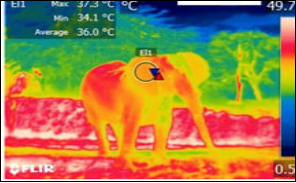
Infrared thermography is a non-invasive method used to measure body surface temperature. Thermal cameras detect heat emitted from the body and create images showing temperature differences across body regions.
This technique can be used to detect:
- Injury or inflammation
- Early signs of disease
- Stress responses
- Thermal comfort of animals
Changes in temperature may occur due to stress because stress affects blood circulation and heat distribution in the body.
IRT used in elephant to measure stress
- Heart Rate Monitoring in Wild Animals
Heart rate measurement is an important physiological indicator used to understand the emotional and physical condition of animals. In wild or zoo animals, heart rate is measured using technologies that allow animals to move freely without causing stress.
Methods used include:
Electrocardiogram (ECG)
ECG is one of the most accurate techniques used to measure heart activity. Electrodes attached to the animal detect electrical signals generated by heart contractions. Portable ECG systems such as Holter monitors can record heart activity for long periods while animals move naturally.
Telemetry Systems
Telemetry is widely used in wildlife research. In this method, a small transmitter attached to or implanted in the animal sends heart rate signals to a receiver. This allows researchers to monitor physiological responses from a distance without disturbing the animal.
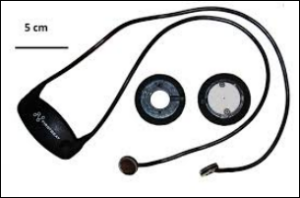

An external telemetry system for recording heart rate in free-ranging large wild mammals
Wearable Heart Rate Monitors
Some animals can be fitted with collars or harnesses containing heart rate sensors. These wearable devices record heart activity while animals perform normal activities such as walking, feeding, or interacting socially.
Ingestible Sensors
Researchers sometimes use ingestible monitoring devices that animals swallow. These sensors detect physiological signals from inside the body and transmit heart rate data wirelessly.
Heart Rate Variability
Researchers also measure heart rate variability (HRV), which represents variation in time between heartbeats. HRV helps determine the balance between stress responses and relaxation responses of the autonomic nervous system.
Technology Used for Monitoring Behaviour
- Accelerometers
Accelerometers are motion-sensing devices that measure body acceleration along different axes. These sensors provide information about posture, locomotion, and activity levels.
They help researchers:
- Record daily activity patterns
- Identify postures such as standing or lying
- Detect walking and locomotion patterns
- Identify abnormal movement or lameness
- Monitor sleep and resting behaviour
Accelerometers are particularly useful for species that are difficult to observe, such as nocturnal animals or species living in aquatic or aerial environments.
- Global Positioning System (GPS)
GPS technology allows researchers to track the geographical location and movement of animals using satellite signals. GPS units attached to animals provide information on movement patterns, distance travelled, habitat use, and social interactions.Studies on zoo elephants have shown that GPS can accurately measure daily walking distances and movement rates. These studies also indicate that animals tend to move more in larger enclosures and in socially complex groups.
- Radio Frequency Identification (RFID)
RFID systems use electronic tags and receivers to identify and track animals automatically. Each animal carries a unique tag that can be detected by a reader placed in the environment.
RFID systems can be used to:
- Identify individual animals
- Monitor movement within enclosures
- Record visits to feeding areas
- Study activity patterns
- Analyse social interactions
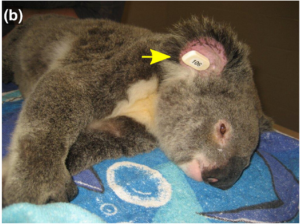
RFID device installed
Bioacoustics
Bioacoustics involves studying animal vocalisations to understand their emotional and physiological states. Many species produce sounds that indicate stress, fear, or positive social interactions.Researchers record these sounds using microphones or hydrophones and analyse them using computer software. Changes in pitch, frequency, and duration of calls may provide information about the welfare state of animals.
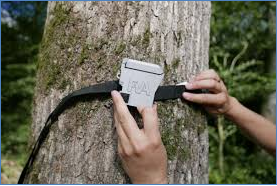
Bioacosustics device
Importance for Welfare Monitoring
Monitoring heart rate helps researchers understand how animals respond to environmental changes, human presence, transportation, and social interactions. These measurements provide important insights into the emotional and physiological state of animals.
Conclusion
Technological advances have significantly improved the ability to monitor and enhance animal welfare in zoos. Tools such as infrared thermography, and heart rate sensors accelerometers, GPS devices, RFID systems, bioacoustic monitoring provide valuable information about animal behaviour and physiology.Combining these technological methods with traditional observation techniques allows researchers to develop a more comprehensive understanding of animal welfare. This integrated approach helps improve management practices and ensures better living conditions for animals in zoological institutions.