



Mastitis in dairy animals during the rainy Season
Koppu Vasavi1, Poloju Deepa2, Bhavani Puvvala3
- Assistant Professor, Department of Veterinary Microbiology, College of Veterinary Science, Mamnoor, Warangal, PVNRTVU, Telangana – 506166, koppuvasavivet@gmail.com
- Assistant Professor, Department of Veterinary Microbiology, College of Veterinary Science, Korutla, PVNRTVU, Telangana – 505326
- Assistant Professor, Department of Veterinary Microbiology, Institute of Veterinary Science and Animal Husbandry, SOA University, Bhubaneswar, Odisha – 751030
Abstract
Dairy farming is an important source of income and livelihood for millions of rural families. The profitability of dairy farming largely depends on the health and productivity of dairy animals. While the rainy season provides abundant green fodder and favorable conditions for animal growth, it also creates an environment conducive to the occurrence of several infectious diseases. Among these, mastitis remains one of the most common and economically important diseases affecting dairy cattle and buffaloes worldwide (Ruegg, 2017). Mastitis not only reduces milk production but also affects milk quality, increases treatment costs, and may lead to premature culling of animals. Since the incidence of mastitis is generally higher during the monsoon due to increased moisture, poor hygiene, and environmental contamination, dairy farmers should be aware of the disease and adopt preventive measures to minimize losses.
Key words: Mastitis, dairy animals, milk, Staphylococcus, antibiotics
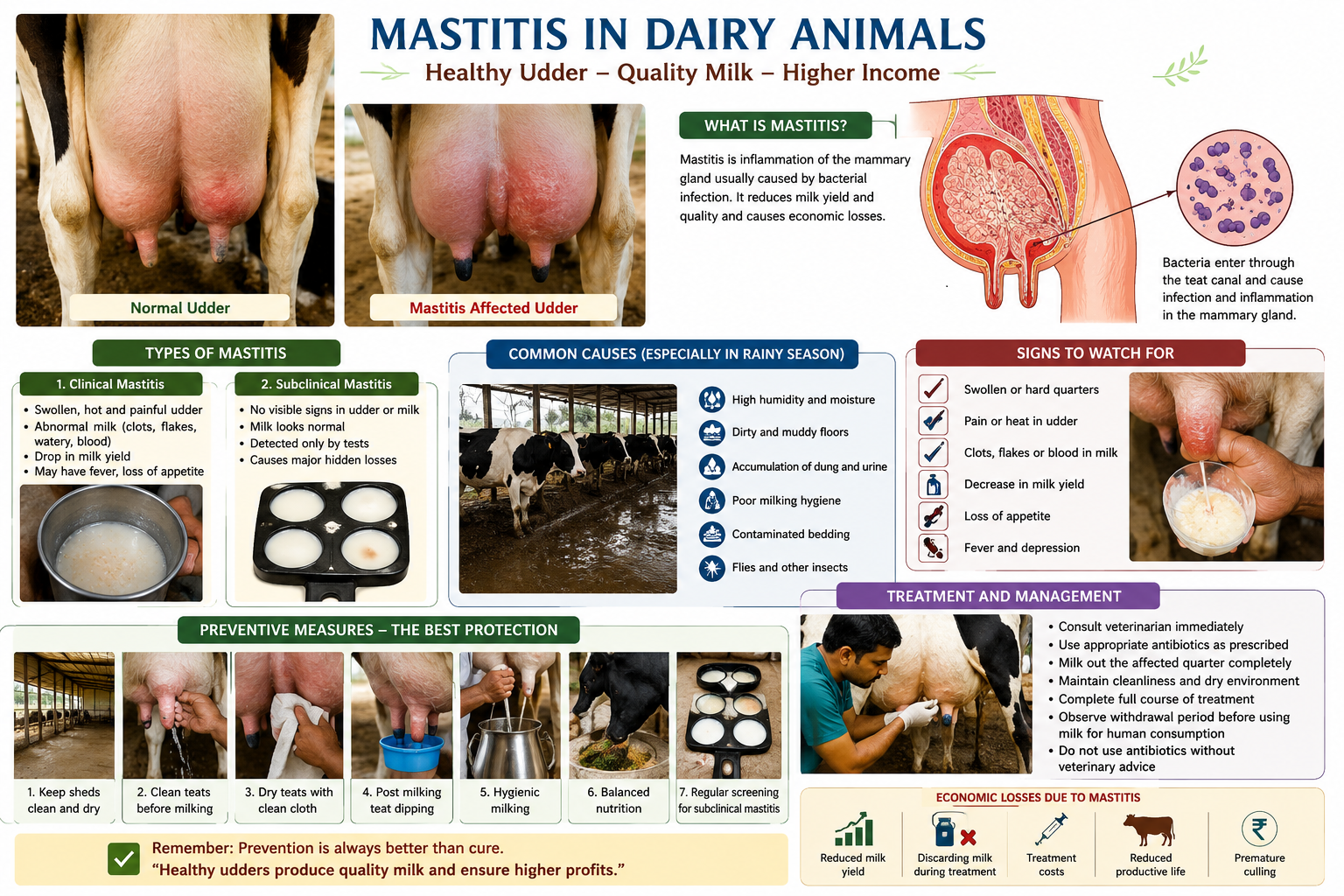
What is Mastitis?
Mastitis is the inflammation of the mammary gland (udder), usually caused by bacterial infection. Disease-causing microorganisms enter the udder through the teat canal and multiply within the mammary tissue, resulting in inflammation, pain, and reduced milk production (Mamo et al., 2020).
Fig. 1 Mastitis Fig. 2 Types of Mastitis
Why is Mastitis More Common During the Rainy Season?
The rainy season creates ideal conditions for the growth and spread of mastitis-causing bacteria. Increased humidity, muddy floors, accumulation of dung and urine, and poor drainage around cattle sheds enhance bacterial contamination of the udder and teats.
In addition, wet bedding materials and unhygienic housing conditions increase the exposure of animals to environmental pathogens. Studies have shown that environmental management and udder hygiene play a crucial role in reducing the incidence of mastitis (Zhang et al., 2025).
Common Bacteria Responsible for Mastitis:
Several bacterial species are associated with mastitis in dairy animals. The most important pathogens include:
| Bacterium | Common Source |
| Staphylococcus aureus | Infected udders, milker’s hands |
| Streptococcus spp. | Contaminated bedding and environment |
| Escherichia coli | Feces and muddy surroundings |
| Klebsiella spp. | Wet bedding and organic waste |
These organisms gain entry through the teat canal, particularly when hygiene practices are inadequate.
Signs and Symptoms Farmers Should Watch For:
Early detection is critical for successful treatment and minimizing economic losses.
| Changes in the Udder | Changes in Milk | General Signs in the Animal |
| Swelling of one or more quarters | Presence of flakes or clots | Sudden reduction in milk yield |
| Increased warmth and redness | Watery or thin milk | Loss of appetite |
| Pain on touching | Blood-stained milk | Fever |
| Hardening of udder tissue | Changes in milk color or consistency | Depression and weakness |
Farmers should inspect milk regularly and seek veterinary assistance whenever abnormalities are observed.
Economic Impact of Mastitis:
Mastitis is considered one of the most costly diseases in dairy farming because it affects both milk quantity and quality. Economic losses arise from:
- Reduced milk production
- Discarding milk during treatment and withdrawal periods
- Veterinary consultation charges
- Cost of medicines and supportive therapy
- Reduced productive life of animals
- Premature culling of chronically infected animals
Research has consistently demonstrated that mastitis is among the leading causes of financial losses in dairy enterprises worldwide (Petrovski et al., 2006).
Treatment and Management:
Prompt veterinary intervention is essential when mastitis is suspected. Delayed treatment can result in severe damage to mammary tissue and long-term reductions in milk production.
Depending on the severity and causative organism, veterinarians may recommend:
- Appropriate antibiotic therapy
- Anti-inflammatory medications to reduce pain and swelling
- Supportive treatment such as fluids and nutritional supplementation
- Intramammary antibiotic preparations where necessary
Important Precautions During Treatment:
- Frequently milk out the affected quarter to remove infected secretions.
- Maintain strict cleanliness of the udder and surrounding environment.
- Complete the full course of treatment prescribed by the veterinarian.
- Follow the recommended milk withdrawal period before using milk for human consumption.
- Avoid indiscriminate use of antibiotics without veterinary advice.
Proper treatment and responsible antibiotic use help improve recovery rates and reduce the development of antimicrobial resistance.
Fig. 3 Preventive measures
Conclusion:
Mastitis remains one of the most important diseases affecting dairy cattle and buffaloes, particularly during the rainy season when environmental conditions favor bacterial growth and transmission. However, most cases can be prevented through proper hygiene, clean housing, balanced nutrition, regular monitoring, and timely veterinary intervention. A healthy udder is the foundation of profitable dairy farming. By adopting simple preventive measures and seeking early treatment when necessary, dairy farmers can safeguard animal health, improve milk production, and enhance farm profitability.
References:
- Mamo, G., Bayleyegn, A., Tadesse, B., & Desta, H. (2020). Readily usable strategies to control mastitis for production augmentation in dairy cattle: A review. Veterinary World, 13(11), 2365–2375.
- O’Rourke, D. (2009). Nutrition and udder health in dairy cows: A review. Irish Veterinary Journal, 62(Suppl 4), S15–S20.
- Petrovski, K. R., Trajcev, M., & Buneski, G. (2006). A review of the factors affecting the costs of bovine mastitis. Journal of the South African Veterinary Association, 77(2), 52–60.
- Ruegg, P. L. (2017). A 100-Year Review: Mastitis detection, management, and prevention. Journal of Dairy Science, 100(12), 10381–10397.
- Zhang, Y., Wang, Y., Li, X., & colleagues. (2025). Comprehensive prevention and control of mastitis in dairy cows: From etiology to prevention. Animals, 15, 1–28.















